

How you correctly say "Appalachia" (Part 2)
I collaborated with the Virginia Tech Speech Lab to analyze over 1,500 Appalachian accents. Here is what we found (part 2)

A little over a week ago, I talked about how I collaborated with the Virginia Tech Speech Lab to analyze the Appalachian accents I collected about a year ago (If you missed it, here is a link to the post).
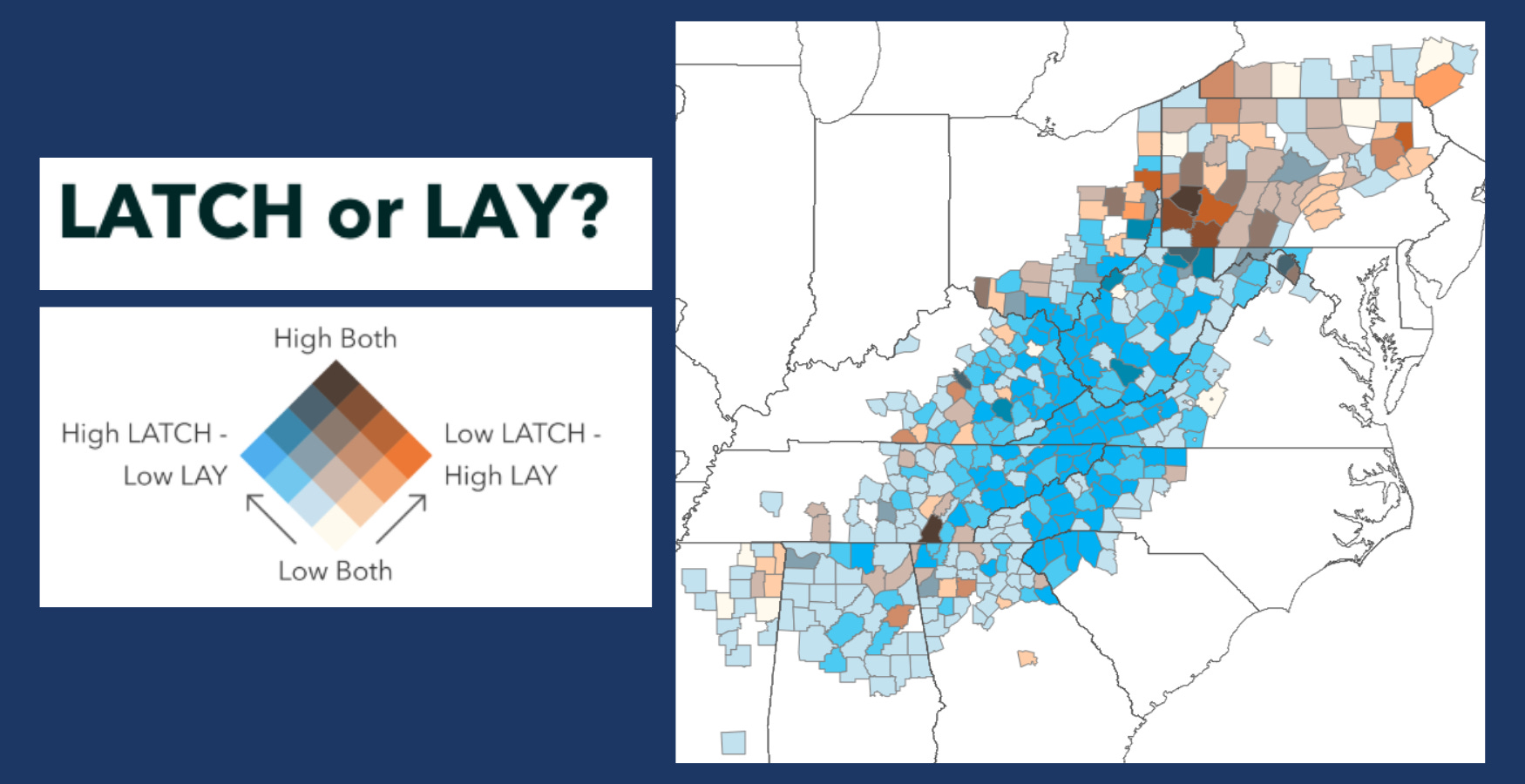
I left off last time talking about the differences in pronunciation by younger and older Appalachians. We found that younger Appalachians are starting to use “latch” more so than older, so the VT team set out to learn more about why that was.
LATCH is increasing
The VT team believes that the reason the latch pronunciation is increasing is a combination of different factors. The term itself is being used more in general, and they also believe that more people are viewing the pronunciation of the central region - the one that, as we discussed in part 1, most people consider Appalachia - to be the correct and authoritative one.
They highlighted a few examples that illustrate this point more broadly. One example below, by Kate in Berkeley County, West Virginia:
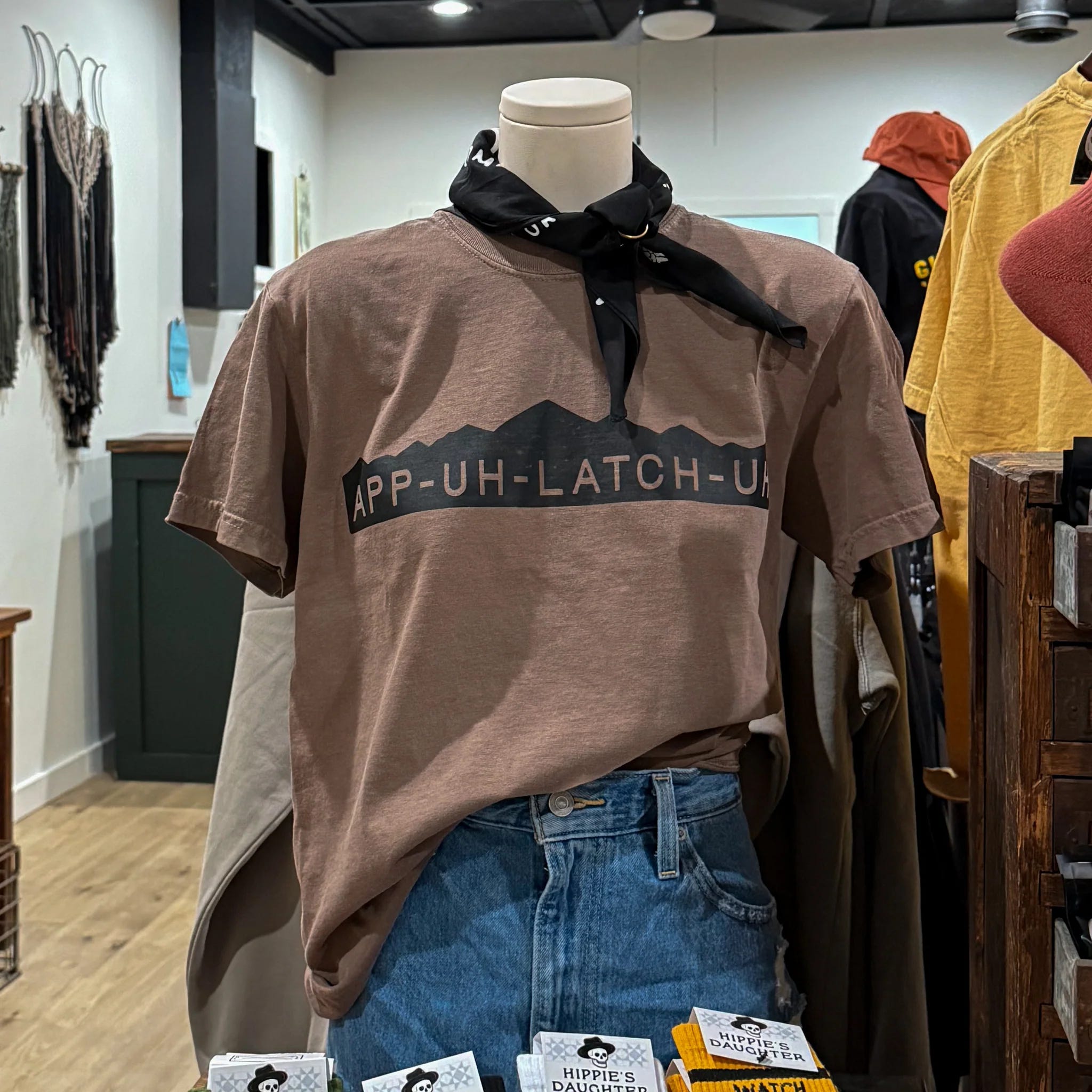
There is also the fact that, especially on social media and across the internet, “latch” is heavily promoted as the “correct” pronunciation. There are even some fantastic retailors who sell merch to that effect.
Outlier pronunciations
Something interesting I found when doing this accent project initially were the variations of pronunciation beyond just your typical App-uh-LATCH-uh vs. App-uh-LAY-SHuh.
While they were not necessarily very common, it was clear that there were other ways of saying Appalachia. One in particular was “lash”.
Lash
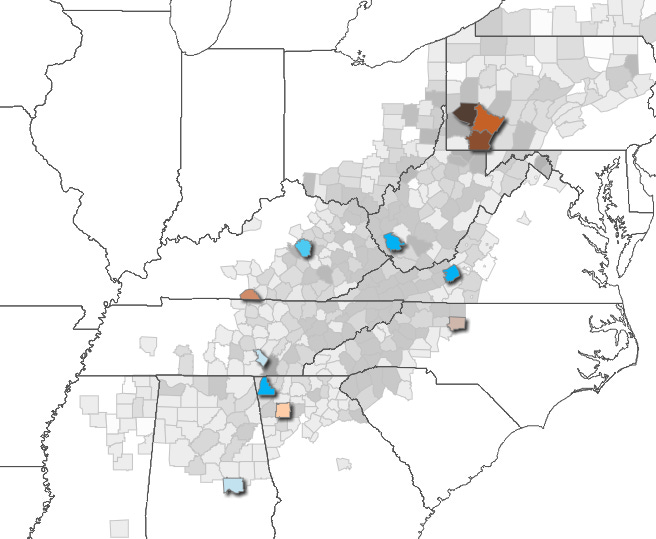
There were a small number of speakers who had unusual pairs of vowels and consonants. Counties with speakers who said LASH, that is App-uh-LA-SHuh,
Two examples of lash were found in Forsyth County, North Carolina and Sequatchie County, Tennessee — just up the road from where I live. Here is one of them:
Laych
A larger number of speakers used LAYCH, or App-uh-LAYCH-uh, in their speech. Notice that most of these speakers are from counties that rest outside or on the fringes of central Appalachia, further showing the uniformity of LATCH-usage in central Appalachia compared to the periphery.
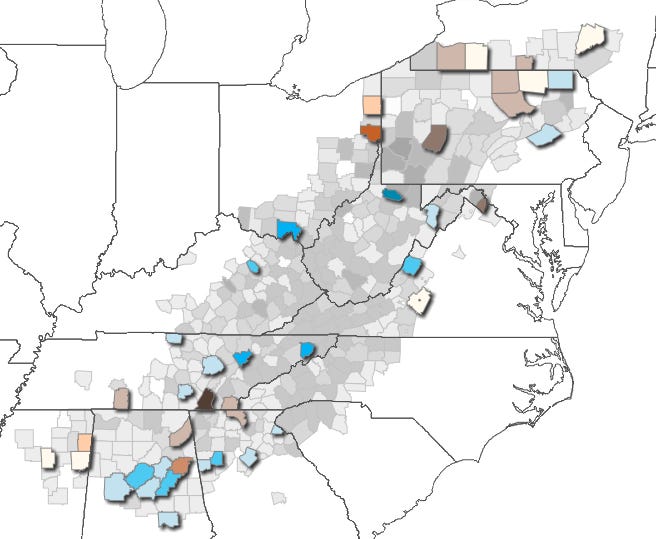
This one also pinged for me when I went through all the accents and assembled the video compilations last year, but Laych was used by a small - but not insignificant - amount of people that submitted their accents.
It almost sounds to me like its a blending of the two dominant pronunciations of latch and lay, but whose to say really.
I do think it is interesting, when looking at the geographic breakdown of the outlier pronunciations, that they all mostly fall outside of central Appalachia. The uniformity in the parts of the region most commonly considered Appalachia is pretty clear.
Lastly, on the subject of outlier pronunciations, there were two others identified by the VT Speech lab team worth mentioning - though there were not very many of them:
App-uh-latch-ee-uh
App-uh-lotch-uh
Pronouncing Appalachia and Appalachian differently
As a refresher, here is the prompt I initially sent out to people when I first collected the accents:
Prompt: “Hi, my name is [name], I am from [County], [State], and this is my Appalachian accent. This is how I say Appalachia.”
This was written very specifically to capture how someone said both “Appalachia” and “Appalachian.” In the past, I had noticed that people often pronounced the region of Appalachia with a “latch”, but when it came to saying the name of the mountain range or trail, they’d pronounce it with a “lay.” I found this very interesting, and wanted to see if there were any noticeable trends that could be identified.
Once again, this variation came from people mostly on the outer edges of Appalachia, and not as much from the central part of the region.
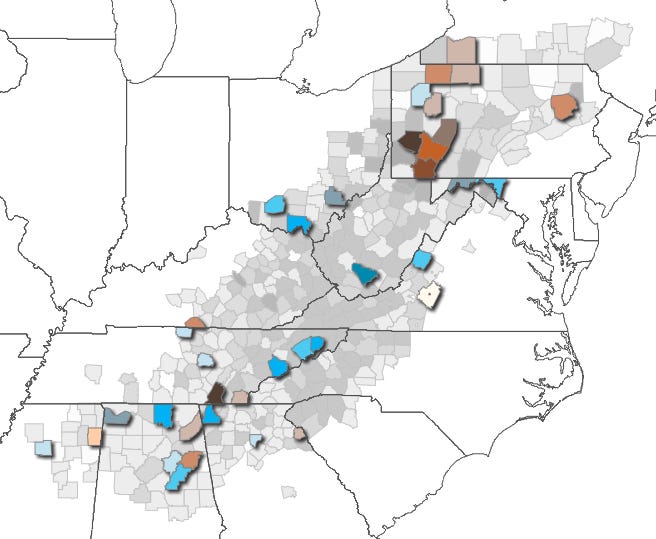
The speech lab had this to say about it:
A small percentage of speakers said "Appalachia" and "Appalachian" differently, either with different vowels or different following consonants, or even both in some cases.
Some speakers acknowledged this, saying they said the two interchangeably or remarking that it was "odd"
While we don’t have enough additional information from the speakers yet to determine how exactly this difference in pronunciation comes about, I find it to be very fascinating that this can occur - and did so in at least a significant enough way that there were multiple speakers who did this.
I hope to do even more with this project in the future - perhaps even conducting another future accent project. I am very grateful for the work of the team at Virginia Tech’s Speech Lab for taking the data I compiled and drawing some fascinating inferences from it. You can find these maps and analysis on their arcgis storymap they created for this project.
Born in New Jersey on 1950, i learned Appalachia in school as appa-lay-chia. But I escaped to West Virginia in 1972 and immediately went to saying it the latch way. Now i can't get my mouth to say it the lay way.
Interesting that you said younger people seemed to be using latch more as I'm 79 and believe I've always said latch, since hearing it differently sounds weird. I grew up in Kanawha County WV, a county with interesting pronunciation unless you grew up there.