

How you correctly say "Appalachia" (Part 1)
I collaborated with the Virginia Tech Speech Lab to analyze over 1,500 Appalachian accents. Here is what we found.

One thing I’ve consistently heard since starting Appodlachia in late 2019 is that people from Appalachia are often told to “lose” or “suppress” their accents.
The reasons for this vary, but often are about perception. Appalachian and southern accents are often associated with being “dumb” or uneducated” in pop culture, and there is a belief that people who have these accents aren’t taken seriously in professional settings.1 This made me incredibly sad, so I set out to my small part in de-stigmatizing the accent.
A brief recap
Last year, I took on the fairly ambitious task of collecting samples of Appalachian accents. I had people send a brief voice recording of them reciting a short prompt:
Prompt: “Hi, my name is [name], I am from [County], [State], and this is my Appalachian accent. This is how I say Appalachia.”
This prompt was very deliberately written to get samples of how someone says both “Appalachia” and “Appalachian.”
To my surprise, we received 1,534 submissions from 408 of the 423 counties in the Appalachian Regional Commission’s map.
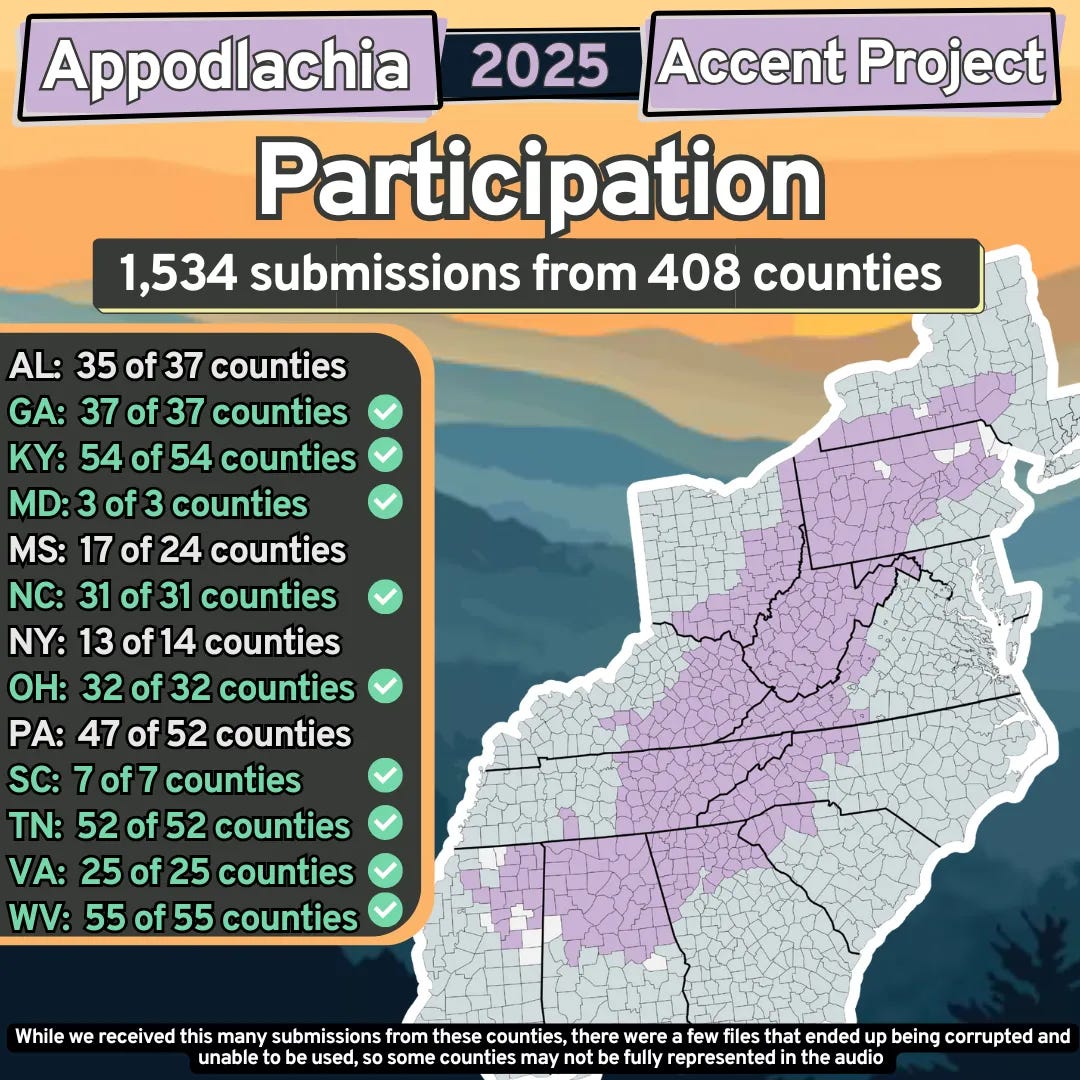
I wrote a bit about it, and included links to the full 4+ hour compilation of accents here.
I’ve since been left with the question of what to do with all this wonderful “data” Luckily, that question was resolved recently.
Abby Walker, the Head of Language Sciences at Virginia Tech, reached out about collaborating on accents. More specifically, putting her team of linguists to work to analyze our accent samples and analyze geographic breakdowns of pronunciation — tackling a fascinating angle to the “latch-uh” vs. “lay-shuh” debate.
I, of course, said abso-fucking-lutely.
Latch-uh & Lay-shuh: diving into the data
The cool thing about working with academics on this project — who are truly the experts in this field — is that they provide technical specificity to this project that makes it much more interesting.
On the pronunciation
There are different ways to say “Appalachia”, with the main variation being on the third vowel, and in tandem, whether the following consonant is an affricate (CH) or a fricative (SH):
Latch or Lay: geographic distribution
I know people have STRONG, often violently STRONG, opinions about how to pronounce Appalachia. For my latch-heads out there, the data will probably make you feel very validated.
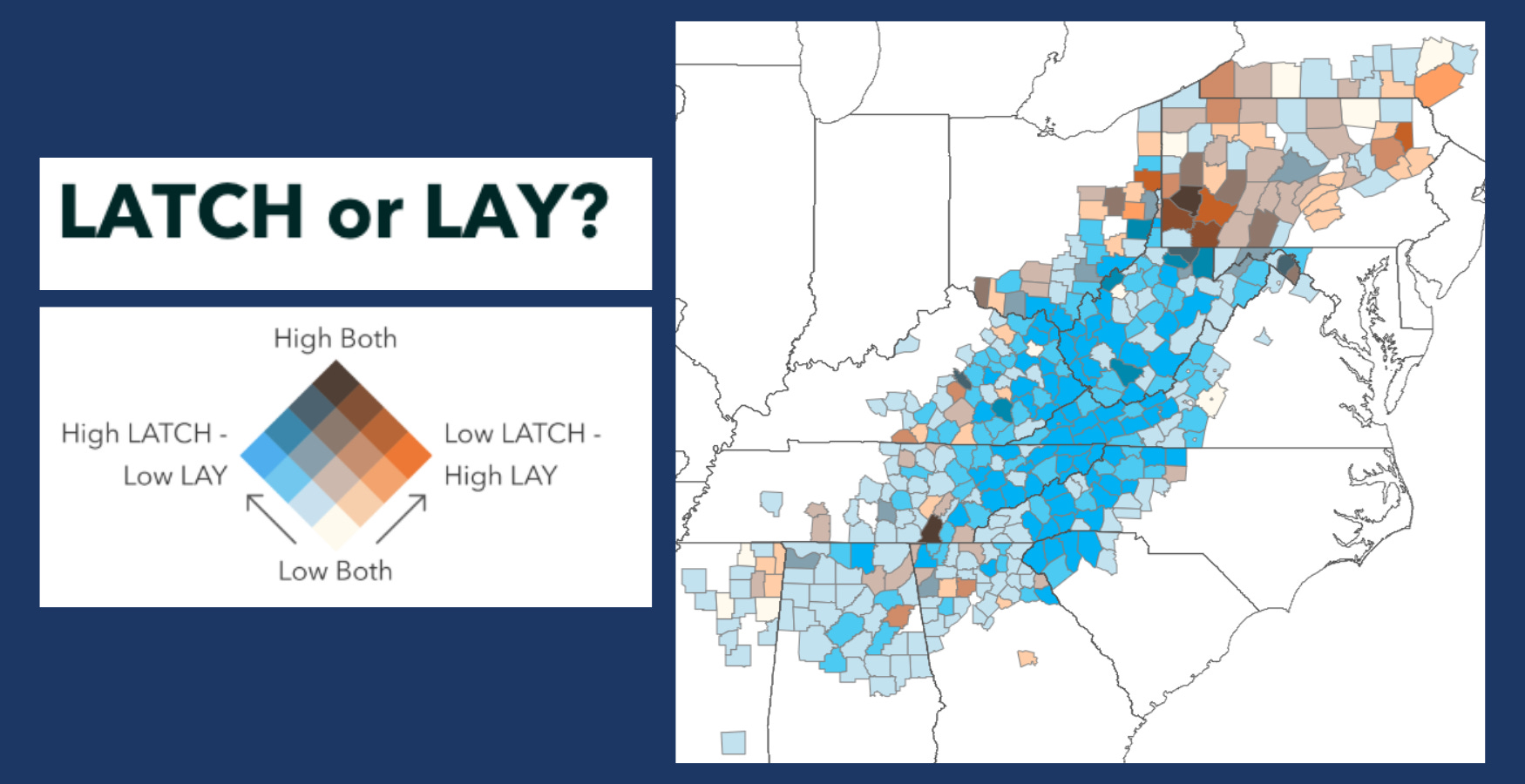
Below is a county-by-county breakdown of latch vs. lay based on the accents we received from people. Based on VT’s analysis:
87.1% of speakers said LATCH
9.2% of speakers said LAY
Its very clear, based on this map, that the lay pronunciations are more concentrated in the northern part of Appalachia (Western + Central Pennsylvania, southwest New York, Southeast Ohio) and somewhat more concentrated in the southern parts (Northern Alabama, North Georgia).
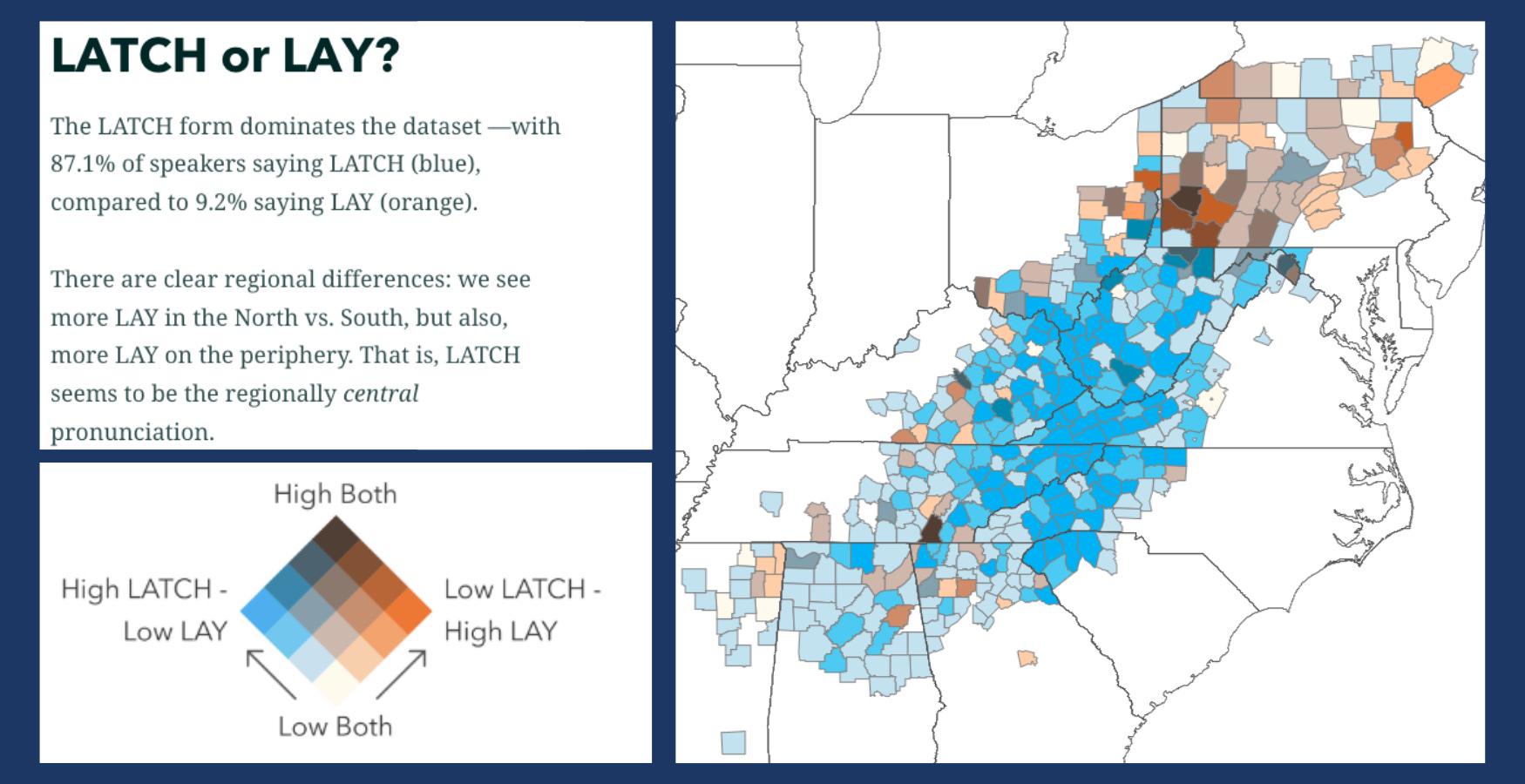
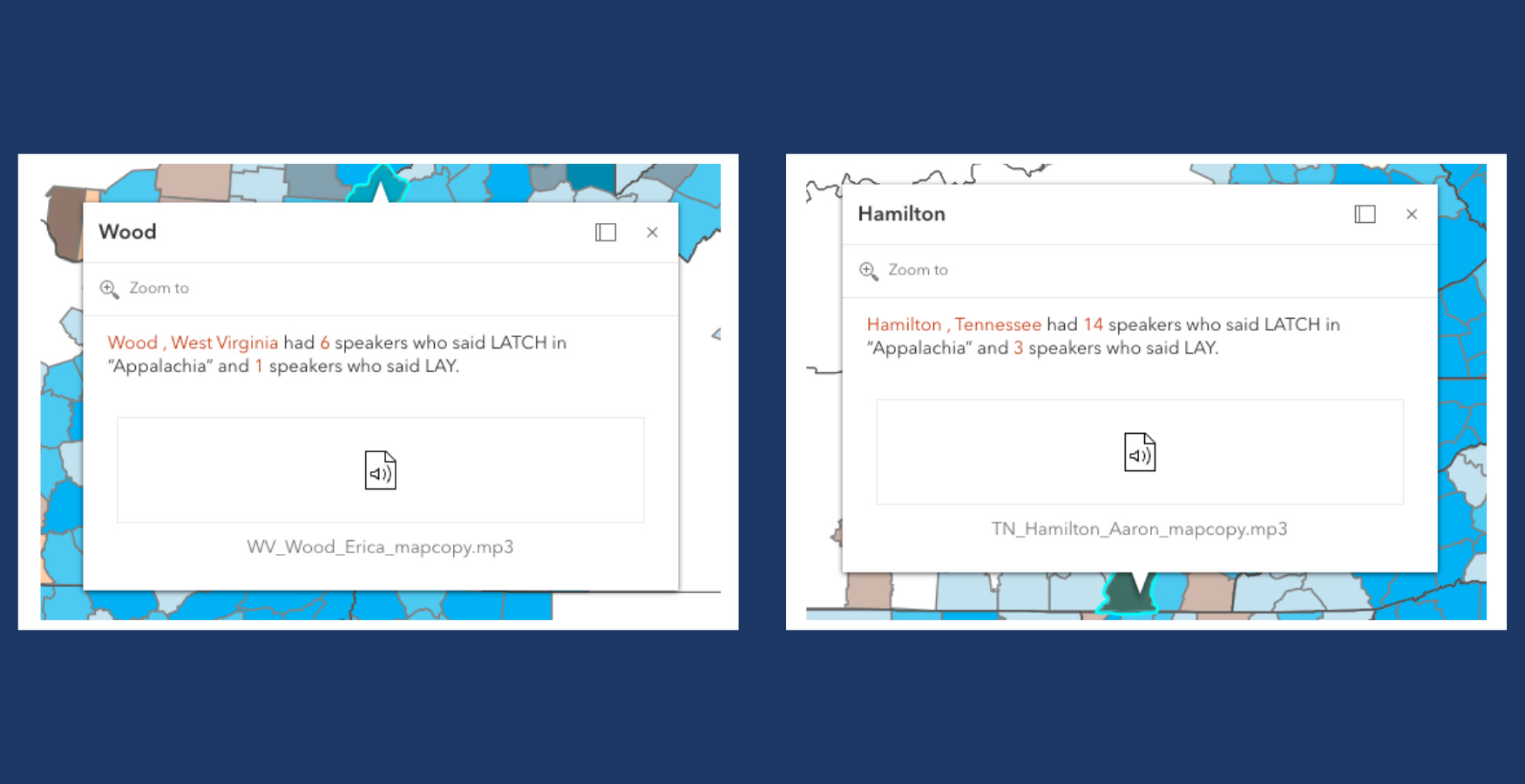
The VT team put together an ArcGIS storymap of all of this data, and even catalogues the accents by county, showing the numerical breakdown of each.
Yes, I know about the Apalachee
Before anyone starts writing out their “well, ACTUALLY” comment about how there is a correct pronunciation of Appalachia is latch because the Apalachee indigenous people.
Yes, I know the history. I think its obviously valid, and worth bringing up in the broader disussion of accents and dialect and pronunciation.2
I plan on dedicating an entire post to the Apalachee. I spent a day at Mission San Luis in Tallahassee about a year ago learning a lot about them and their history. The history of their “ball game” in particular was wild and fascinating.3
Latch or Lay: Isoline perception of latch vs. lay
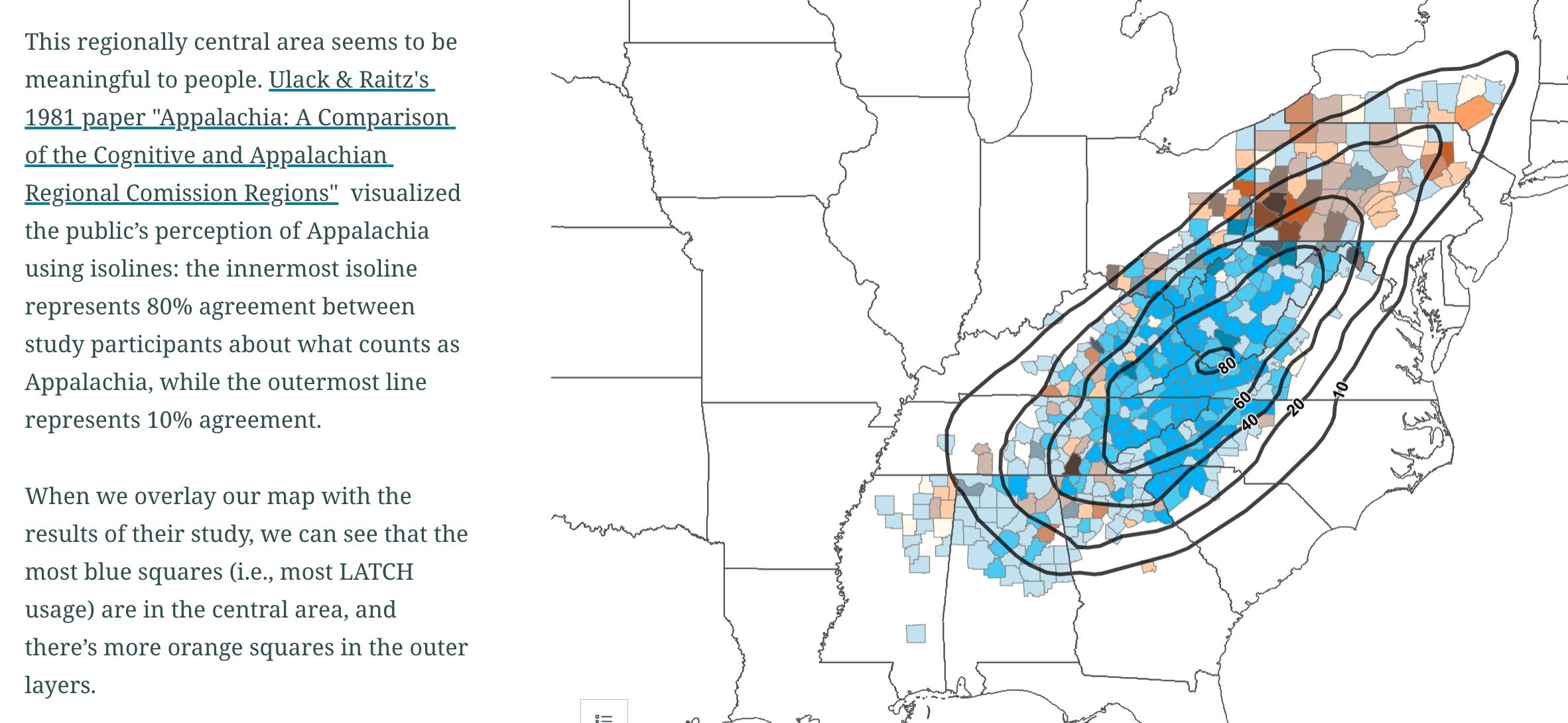
Public perception of what is and isn’t Appalachia is a source of much debate. I should know, I’ve existed on the internet as an entity arguing about Appalachia for the better part of 6 years, and have had to endlessly entertain the “THIS ISN’T WHAT I - the most important person in the universe and an enlightened intellectual - THINK APPALACHIA IS” refrain on more occasions than I can count.
These lines on the above image are used to visualize the public’s perception of what is and isn’t considered part of Appalachia: “the innermost isoline represents 80% agreement between study participants about what counts as Appalachia, while the outermost line represents 10% agreement.”
The Speech Lab team overlaid these lines onto the geographic county-by-county breakdown, and the takeaway is this: the areas that the majority of people consider to be Appalachia are ones that predominantly use the “latch” pronunciation.
Latch is becoming more dominant with younger generations
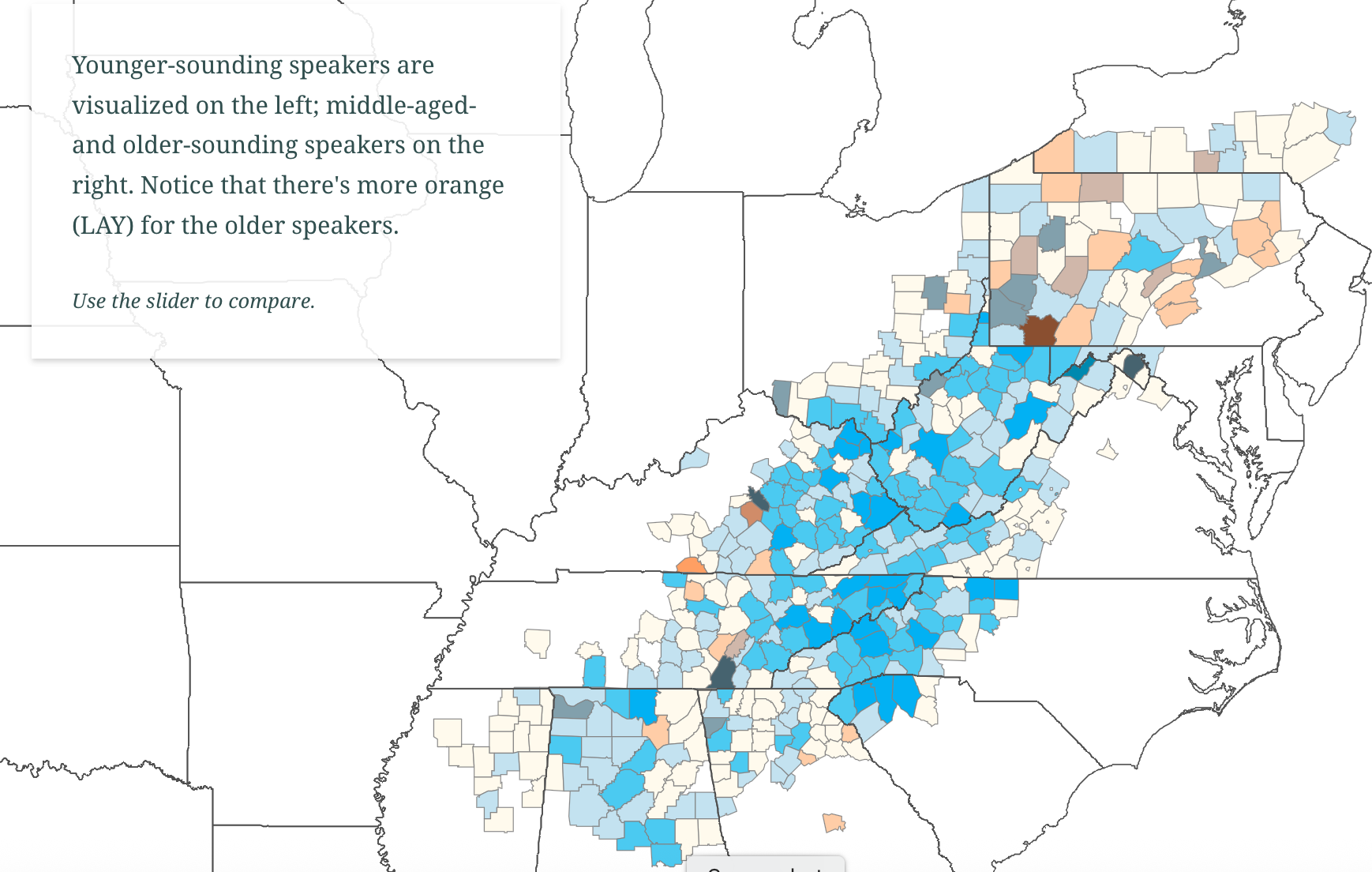
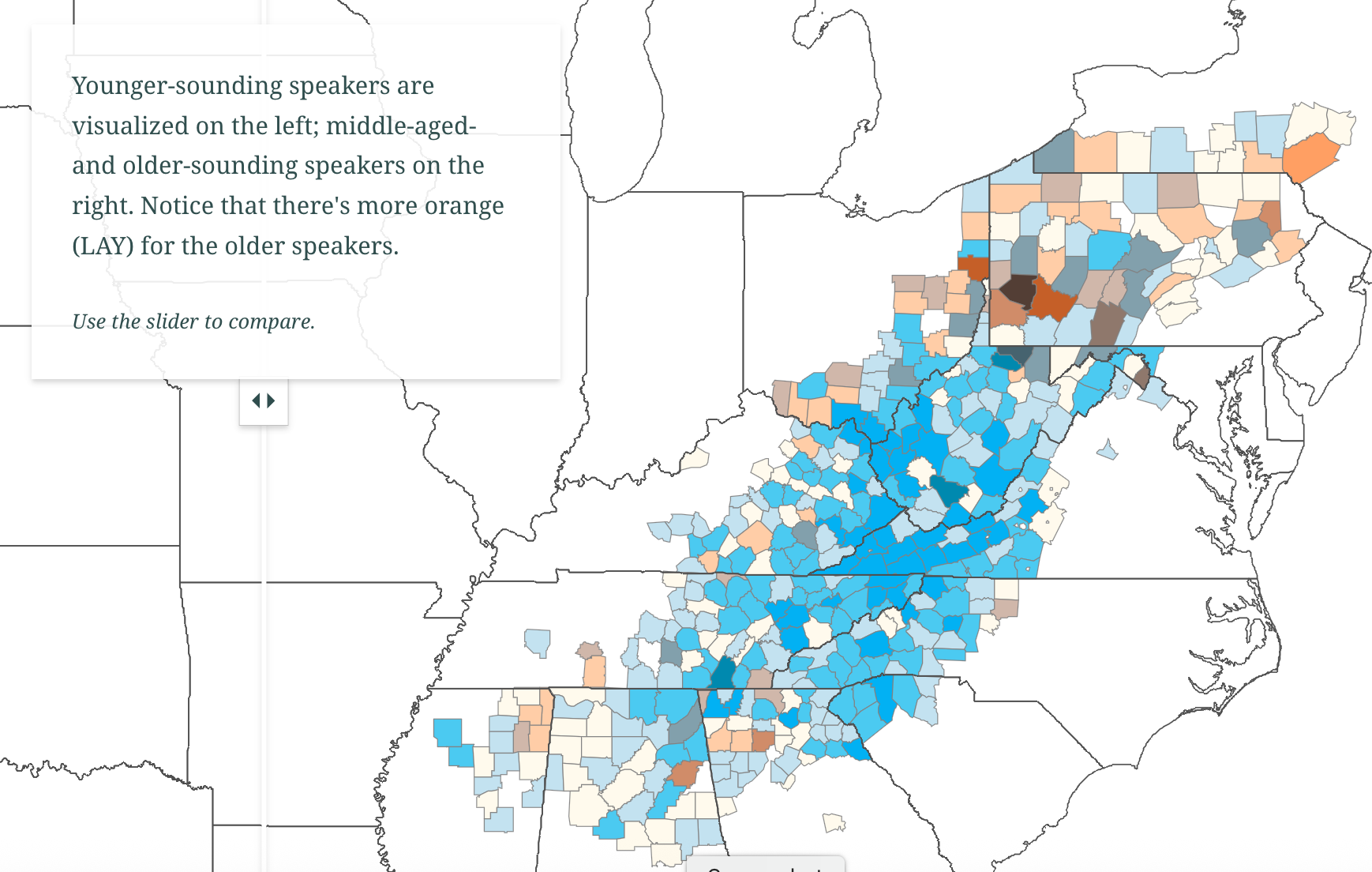
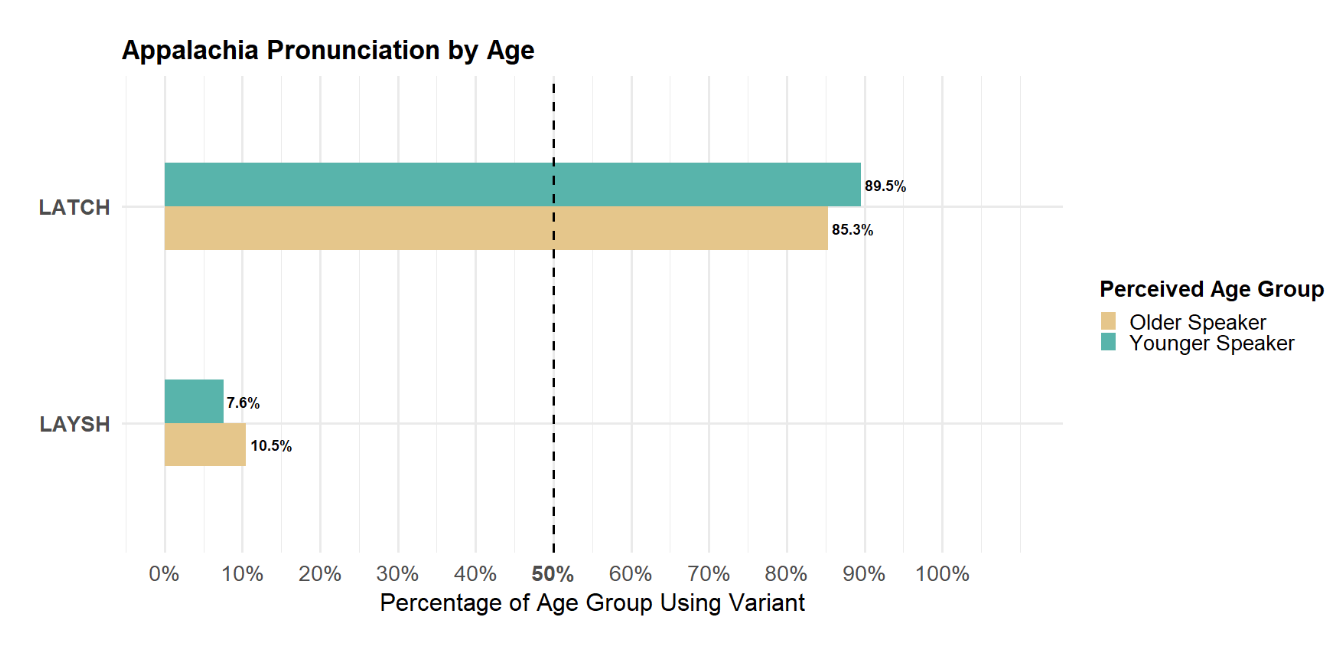
The research team estimated the age of people who sent in their accents and noticed a trend among younger people using the “latch” pronunciation more so than older people.
I will get into a lot more about why we’re seeing a change in pronunciation in general in Part 2, as well as alternative pronunciations and variants. PLUS, how some people pronounce the mountain range one way, and the region a different way!
Make sure you’re subscribed so you can get part 2!
I’m not going to dispute the validity of this. I’m sure its more true in some places than others, and I don’t blame anyone who lost their accent due to being given this advice.
I don’t think shouting someone down and saying “you’re wrong” because they say “lay-shuh” is productive. Its also dismissive of people who have grown up in parts of Appalachia that say it this way, and its the only pronunciation they’ve known their entire life. Language and pronunciation is allowed to evolve while still retaining the history of a word’s origin. It’s what makes the title of this post kinda fun because I believe there can be multiple “correct” pronunciations.
This is just one example of “ball game”: “Play was rough. They would try to hide the ball in their mouths; other players would choke them or kick them in the stomach to force the ball out. There were occasional deaths. According to Father Paiva, five games in a row had ended in riots”
Shh shh everybody, I’m watching my stories! Honestly, data collection and analysis is my favorite and I’m so glad VT collaborated to help make sense of it all!!
I grew up in Allegany County, MD; and I'm fascinated that it's like this little grey blob right on the edge of blue and brown zones. I live in Chicago now, and have some strong feelings about regional stereotypes, but it does feel like that spot is a weird little outlier in ways I can never quite put my finger on. I'm never quite sure how to explain my relationship to Appalachia to people because, franky, "it's complicated." Like I'm not really "rural" enough to be a proper Appalachian, but I'm close enough to pass for it to outsiders. And I have no idea where my weird, eliding high-speed twanging comes from, but it must've come from somewhere, right? A strange man from a strange place.