

I visited a shrine to class war located in the "reddest" part of Appalachia
Tucked in a small, remote holler in a county where Trump got 86% of the vote sits a museum dedicated to telling the story of class war and worker solidarity. I finally had the chance to see it myself

(I’m working on a post with my full thoughts on what happened in Tennessee last week, and plan to publish it later this week. I just couldn’t really gather all my thoughts to articulate it completely and wanted to share this before)
Edit: fixed some typos that I missed in proofing.
We live in a time when information suppression is a very real thing. School boards across the country are banning books and prohibiting discussions of subjects that most normal, sentient humans would not find even remotely controversial.
The Battle of Blair Mountain — an armed revolt by coal miners in southern West Virginia resulting in the largest labor uprising in American history where the U.S. military dropped bombs on its own people for the first time ever — is one of those events that gets suppressed. In fact, in my 13 years1 of West Virginia public education, I never once learned about this — one of the most consquential historical events that served as a catalyst for many of our modern day federal labor rights.2
Because of this, it is important that institutions exist to fill these information gaps for people. More on that later…
The beatiful, winding roads to Matewan
Mingo County is one of the poorest counties in the nation by household income and historically neglected by both political parties.3 It is in the southern coalfields of West Virginia, is sparsely populated, and fairly remote compared to other parts of the state.
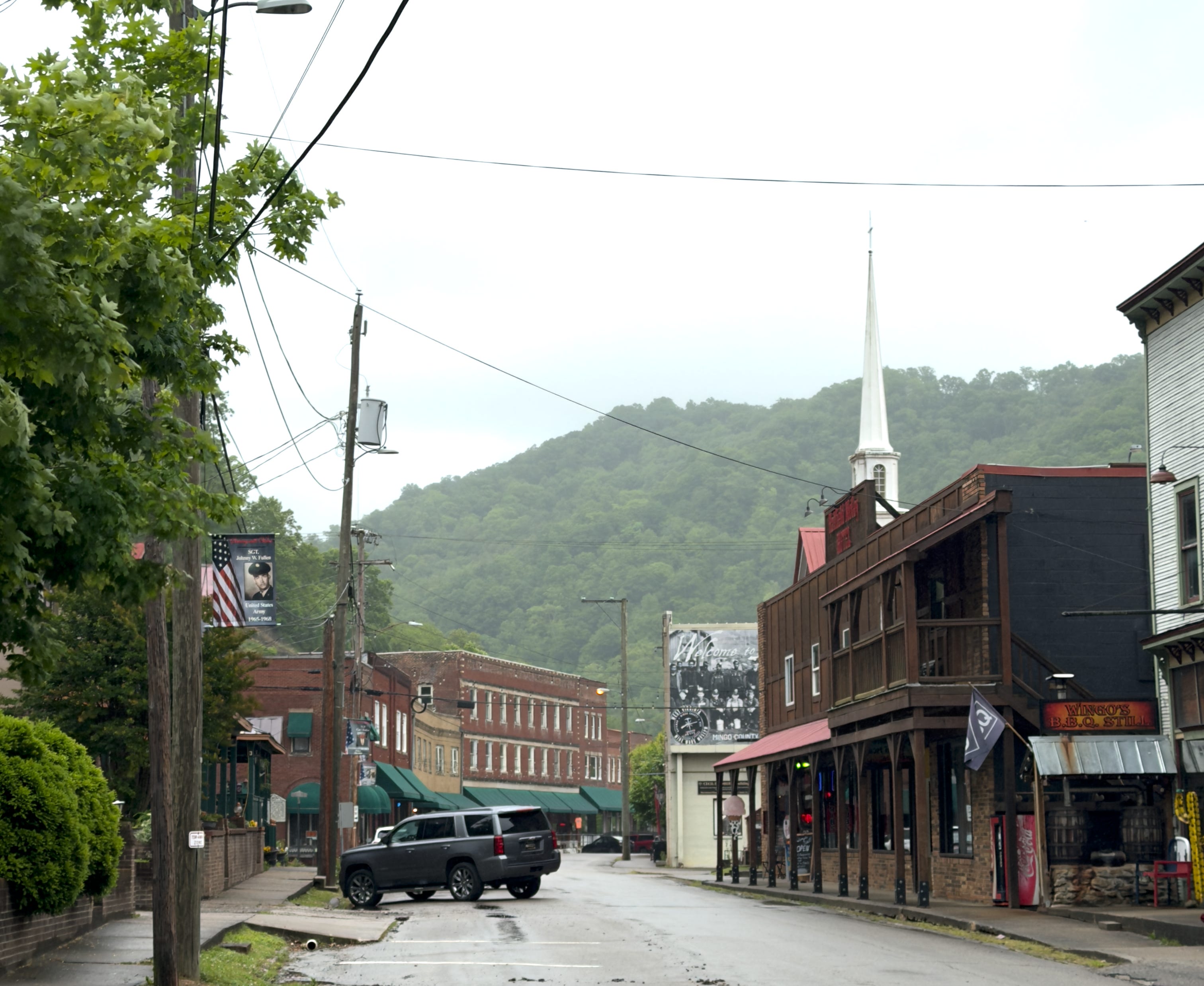
I like Mingo County. Its got its bumps and bruises, like any other place in West Virginia, but its one of the prettiest counties in the state. I spent a little bit of time there back in the 2010s because my sister was a teacher at the local middle and high schools.4
Last week, I drove up to West Virginia to visit my family in Parkersburg and attend the Wasteland Jamboree Fallout fan festival in Flatwoods (an amazing event that I may expand upon more in future posts). On my way back to Chattanooga, I made a detour into Matewan.
Matewan, West Virginia (pronounced Mate-waan), is definitionally “in a holler” by any Appalachian measurement, and its not exactly on the “main drag” so to speak with respect to the major highway arteries. While not particularly difficult to get to, you will find yourself navigating your fair share of winding roads that slice through rolling hills like a knife cutting into room-temperature butter while experiencing multiple cell phone service outages along the way. They are roads that make for good country road driving,5 as I like to call it.
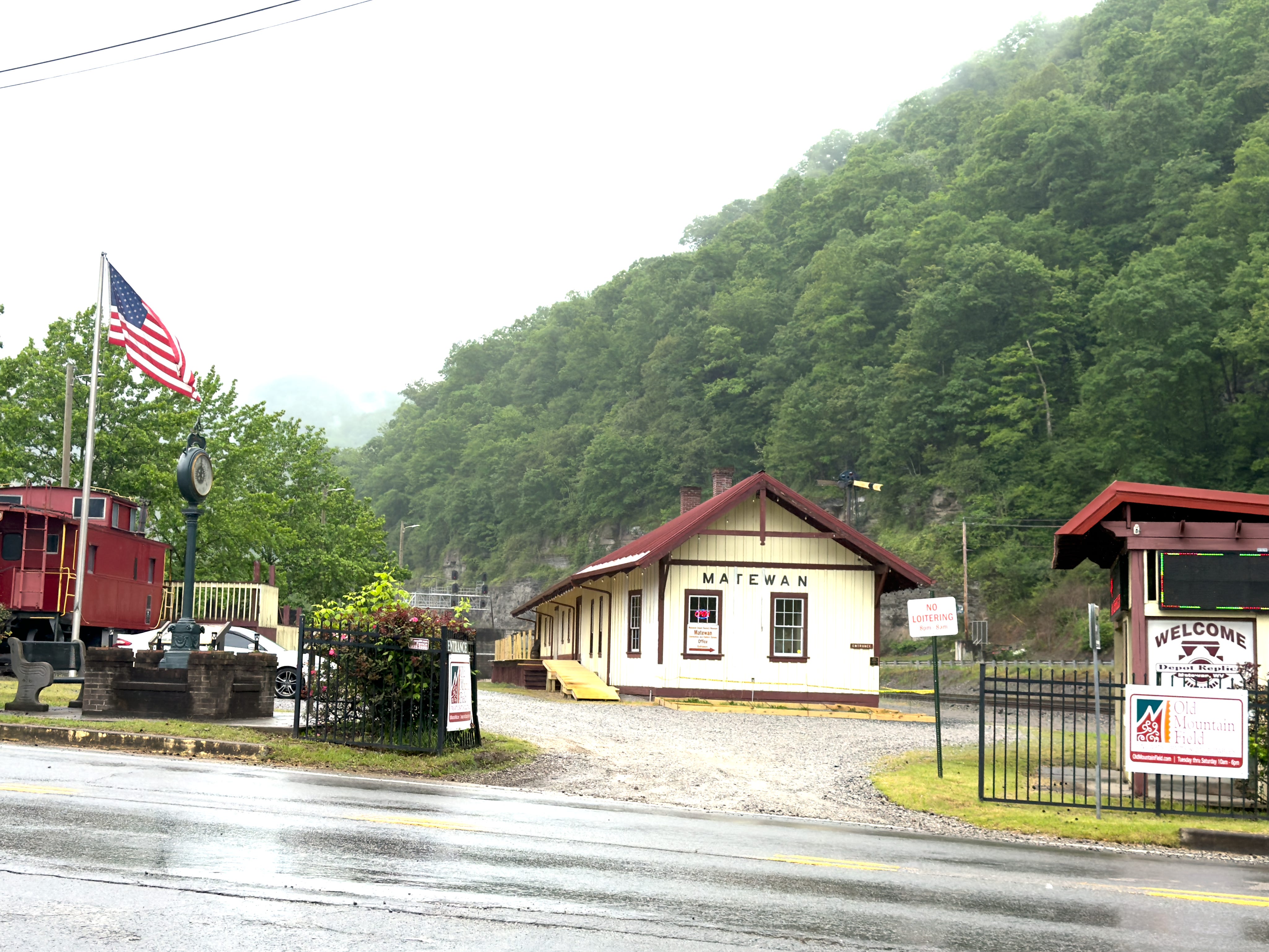
I arrived into Matewan on what Winnie the Pooh would describe as a blustery Wednesday afternoon. Rain had temporarily subsided, but you could see big fog formations resting at the top of the hills that surrounded the town — a comforting sight that transported me back to my childhood growing up in West Virginia, during the early morning hours at summer camp in Hampshire County.6
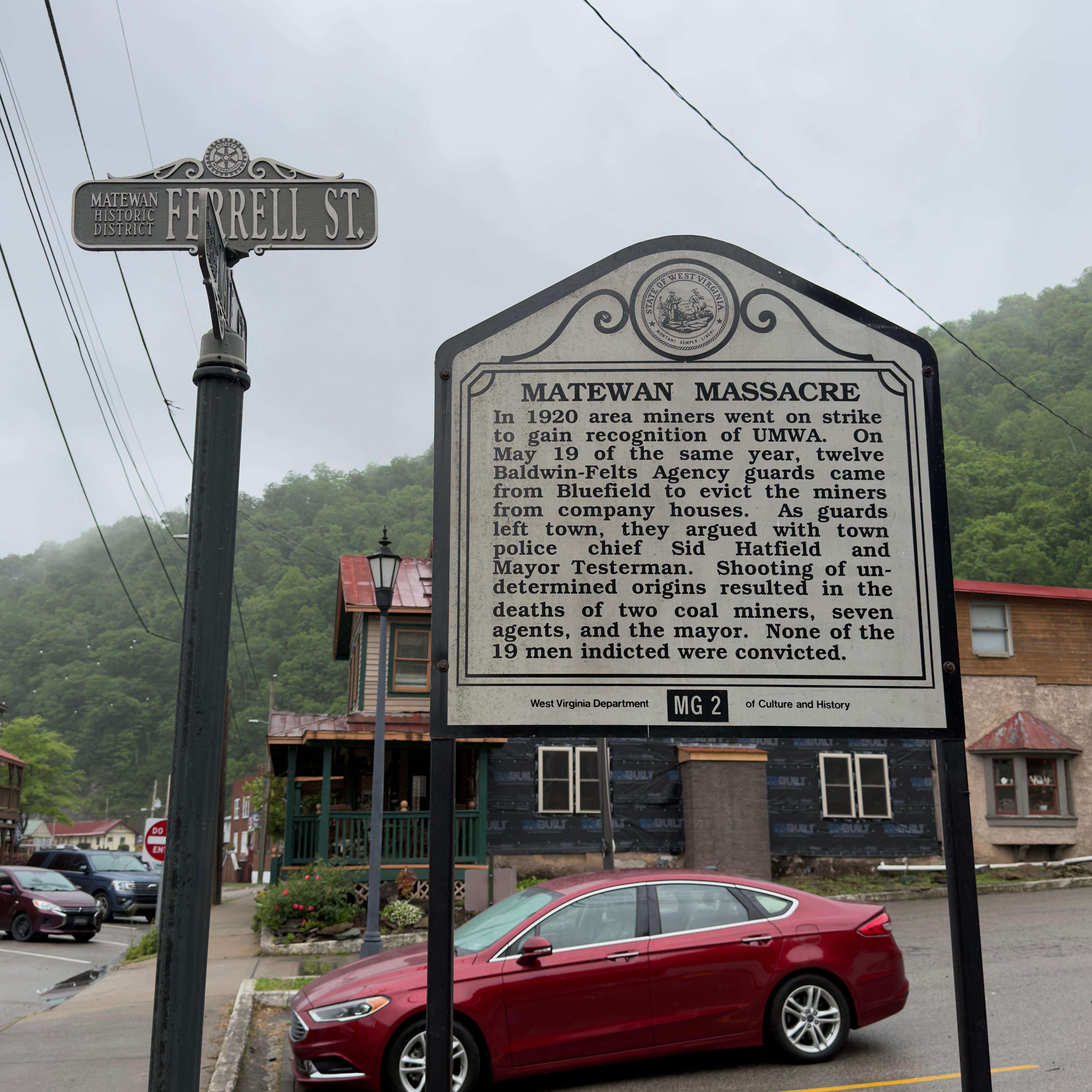
Matewan is the site of the Matewan Massacre — a seminal event in what would coloquially become known as the mine wars that lit the fuse of revolt, and cemented Sid Hatfield’s legacy as one of the good cops. I won’t go into too much detail about this, but he is a fascinating historical figure.
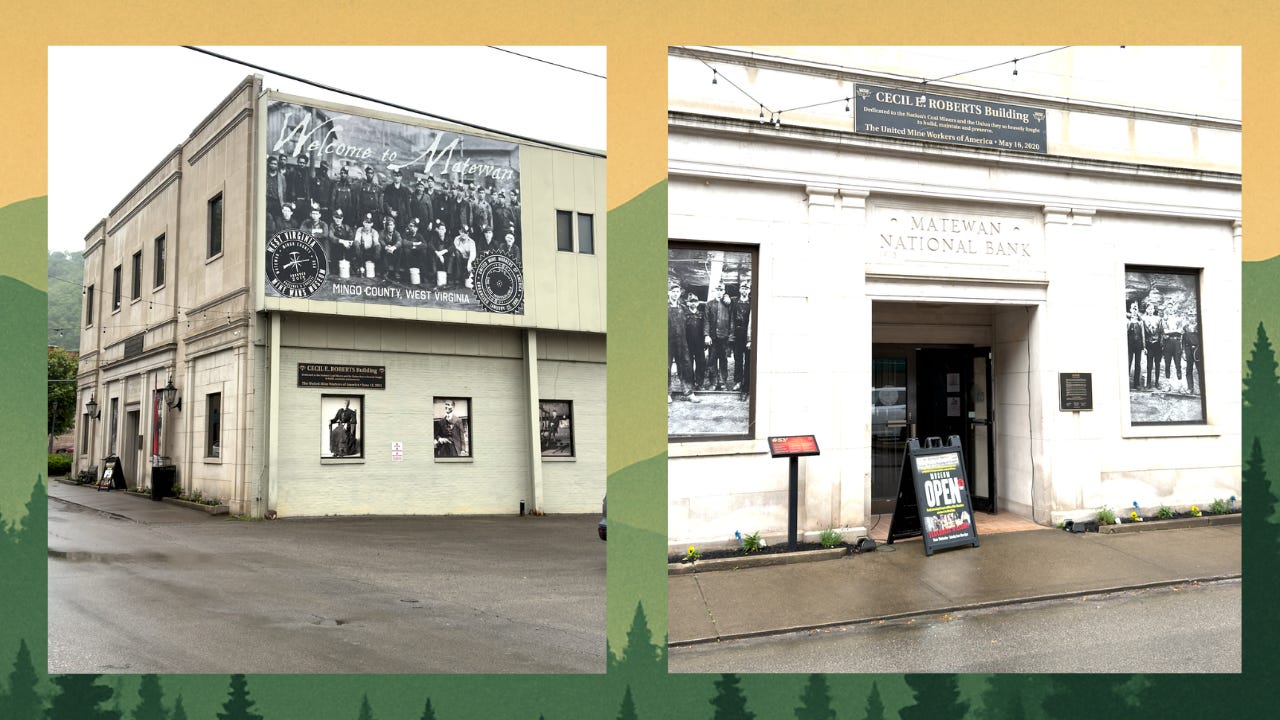
The WV Mine Wars Museum
I’ve been a member of the West Virginia Mine Wars Museum for several years, though had never been in person until this week. As many of you know, unions are extremely important to me and formed the foundation of my belief system. This, and labor history, are things I’m very passionate about, so the mine wars museum was always something I really appreciated. Suffice it to say, I was extremely excited to see it for myself.
The museum is organized as a chronological timeline, and begins by setting the context for the violent events it derives its namesake from - with items like a display of different coal scrips, descriptions of the company town environment, and discussions about the child labor used in mines.
Socialist miners
Socialism is an important aspect of labor history, and the museum addresses this with a display about Lawrence Peggy Dwyer - an absolute GOATed figure that I’d never heard of until visiting the museum.
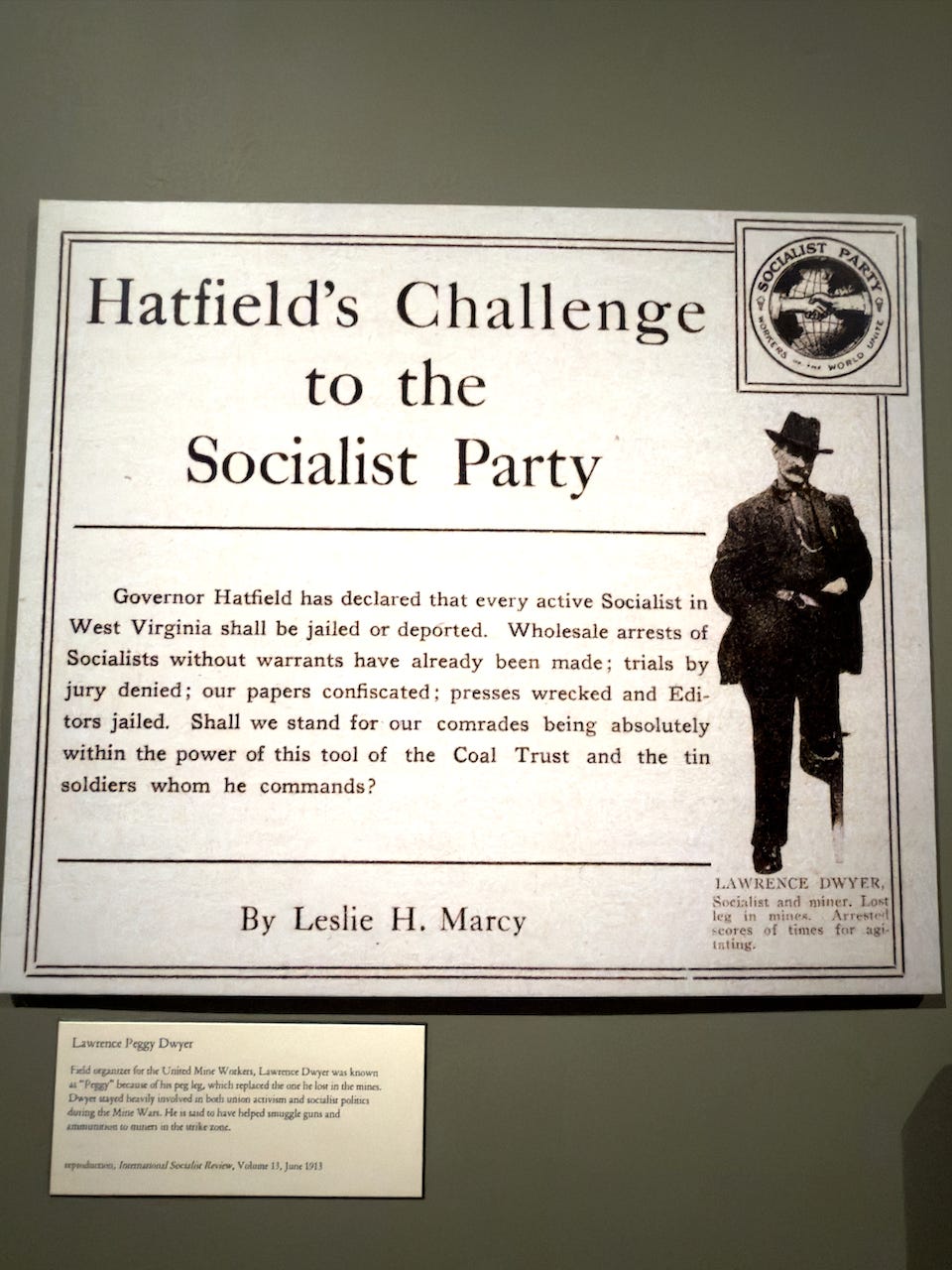
Jailing and deporting7 people who claim to be socialists (and elsewhere in the country, this happened to communists), is another form of thought policing and thought crime. Its ridiculous, but it was a very real thing that happened sadly.
The United Mineworkers of America
The UMWA, unsurprisingly, has a large presence in the mine wars museum. So much so that the building housing the museum is named after the longtime president of the union, Cecil Roberts - who voices parts of the audio exhibits.
This union was one of the only means of pushing back against the oppressive coal companies.
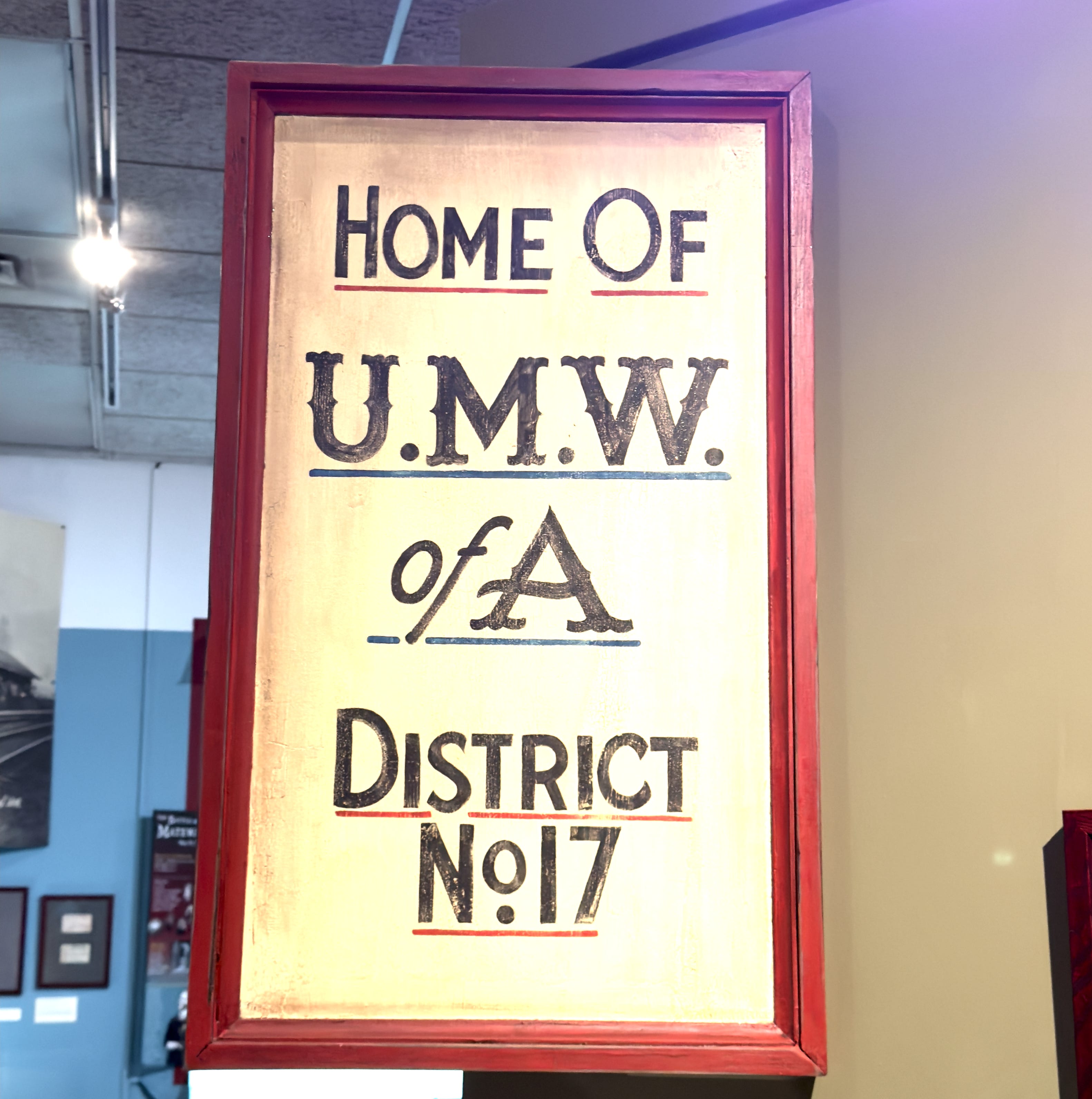
The ascension of John L. Lewis to the presidency of UMWA in 1919 marked a pivotal moment in the union’s history at a time when tensions were extremely high between miners and coal company bosses.
The single most important event in the history of Matewan - the Matewan Massacre - occurred only a few yards away from the museum. This fight highlighted the strength and bravery of the legendary Sid Hatfield, and cemented his legacy as “one of the good police officers” as I like to call him.8
The Battle of Blair Mountain and it’s erasure
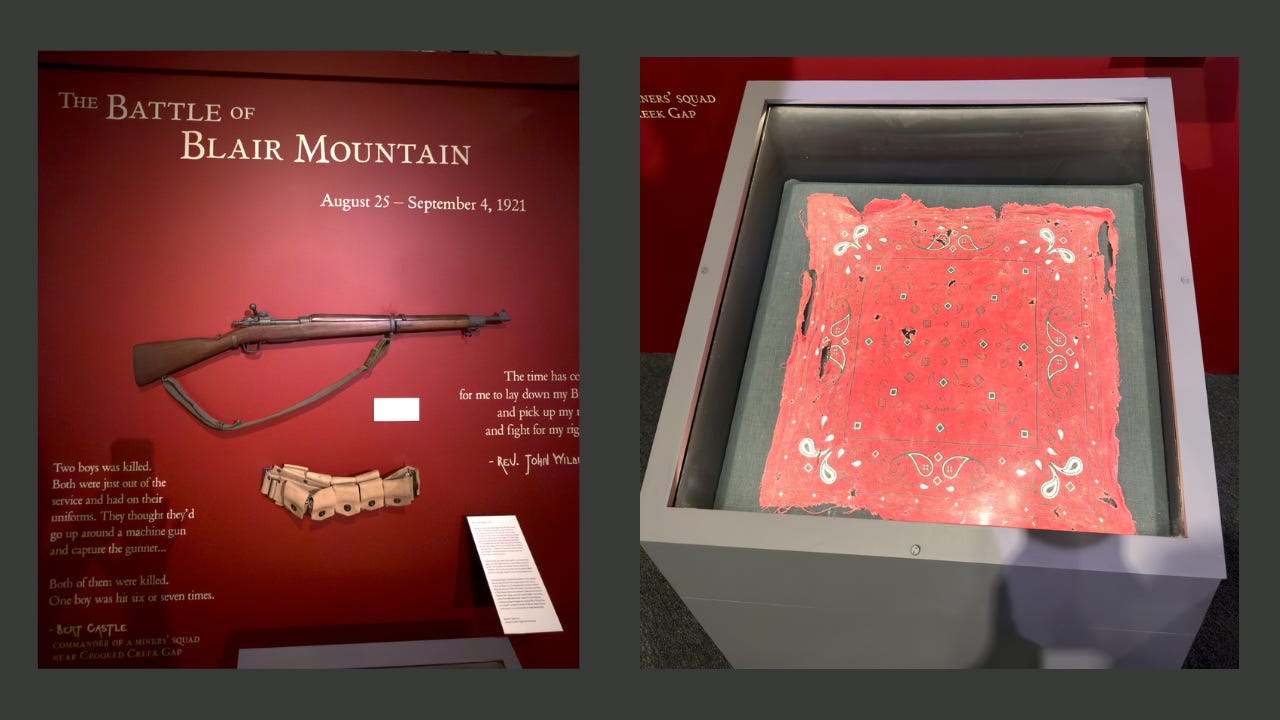
The crown jewel of this museum is their exhibit on the Battle of Blair Mountain. Its a story that, like I mentioned earlier, is rarely told and often suppressed in many public education settings.
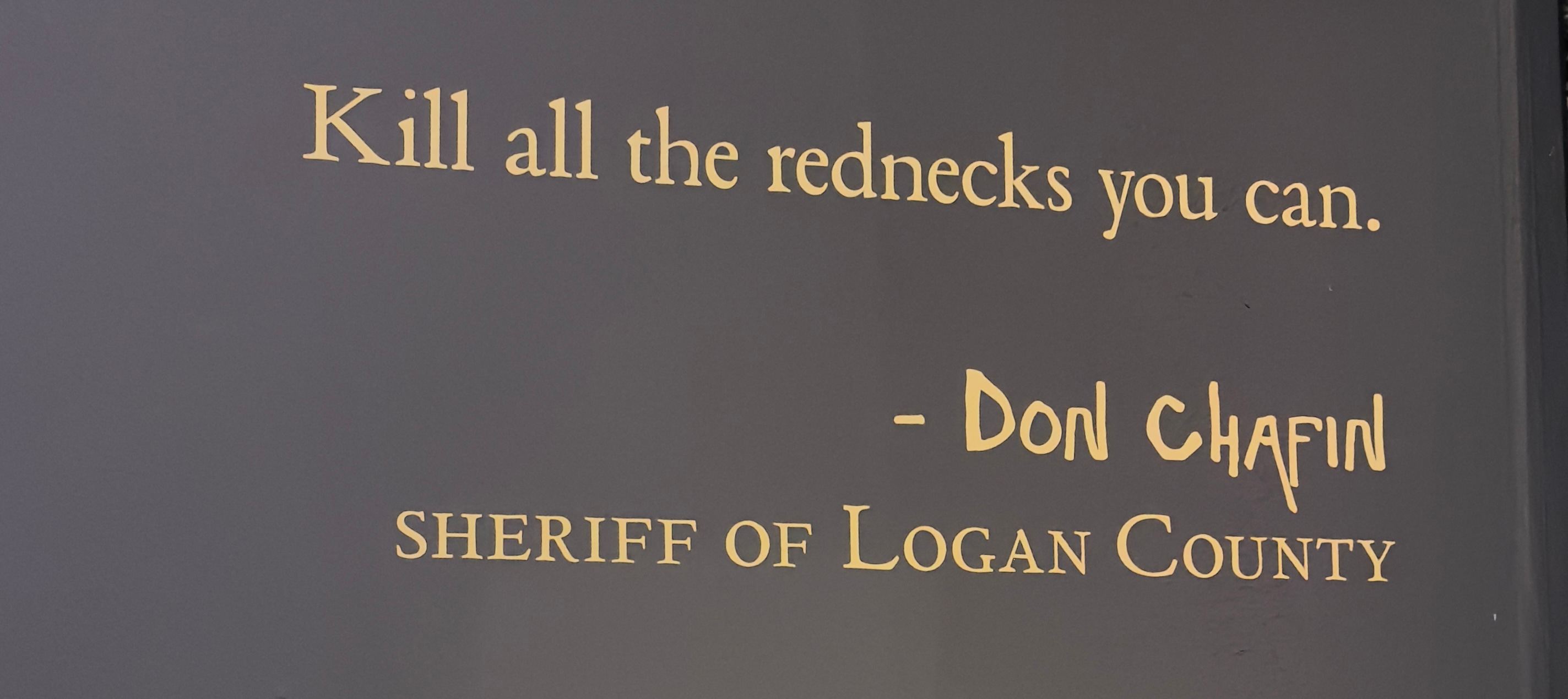
I stood for several minutes to take in what I was seeing. This may sound a bit dramatic and exaggerated, but I promise you it isn’t. When you grow up in a place like West Virginia, and you have grown to see the state’s politics separate so much from its radical origins, you become grateful that an institution like the mine wars museum exists to tell these important stories.
And the museum even touches on this!
Erasing Blair Mountain
What I found the most fascinating and eye-opening was exactly how Blair Mountain, and the Mine Wars in general, were scrubbed from the history books. There were efforts to sabotage New Deal programs in West Virginia if the events of the Mine Wars weren’t sufficiently scrubbed. Here is an excerpt from the museum:
The absence of the Mine Wars and other industrial abuses of power in public discourse and class curriculum was no mere oversight, but rather a deliberate coverup by state officials. During the Depression, Governor Homer Adams Holt threatened to thwart New Deal Programs in West Virginia unless the Mine Wars were removed from a federally funded history book in the state
As this collection of publications and textbooks demonstrate, the Mine Wars didn’t make their way into the narrative for over fifty years, while the coal industry was continually praised as a beacon of progress and prosperity.
I had to read this several times over, because it was so startling - yet made so much sense. The coal industry was praised as a beacon of pride and hope growing up in West Virginia. Even where I was from in Parkersburg, a place where coal mines were not even remotely close to, it was ingrained as a source of state pride and a cultural touchstone to the Mountain State.
Overall, I found the West Virginia Mine Wars Museum to be an extremely impressive collection of our state’s history, and our country’s history. The events this museum documents in meticulous detail echo through the halls of history in our state and country. All workers today owe a token of gratitude and thanks to the miners that marched on Blair Mountain, that died on Blair Mountain, because they served as a catalyst for our federal protections that - while not enough - are enjoyed and appreciated today.
I hope anyone reading this makes the detour down to Matewan sometime and checks out the museum. Its contents should be required curriculum for every public school history class, but especially in West Virginia. Coal companies and the rich people who benefit from the back-breaking labor of miners no longer get to tell the workers history.
We’re counting Kindergarten.
Once again, I feel obligated to say that my use of em dashes is due to my inability of ending sentences at a normal, reasonable length — not due to the use of AI.
Until its an election year, in which case candidates across the state will happily rain praise upon the beautiful coal miners and their families that populate this and other southern West Virginia counties. Because you have to pretend to care about coal miners when you want to win a statewide race in West Virginia (when in reality, the politicians typically only care about the coal companies).
Mingo County has a tough time hiring and retaining teachers (as does most of the state tbh), and didn’t have the resources to hire two Spanish teachers, so my sister worked at multiple schools.
Allowing your vehicle to cross the center lane multiple times after coming out of curves.
It turns out, this specific phenomenon is known as “radiation fog”. You learn something new every day!
Deporting was deliberately used here because many coal miners were immigrants.
Labor history is not taught in US schools. It’s a censored topic. Of course, I taught it in Appalachian Studies at the university. But that’s a pretty select group of students.
Great article. The histories untaught are the important ones.