

The refugee stories of the World Cup you won't hear about
Most footballers don't come from privilege. Some come from war-torn worlds.

Yes, I am once again doing a World Cup-themed post on No Elegy Needed. For those of you who only want Appalachian content, I am sorry and rest assured I will be back to that next week. For those of you that enjoy this, thanks! I’m glad to hear it.
I have and will always maintain that soccer (we’re gonna call it football again from here on out) is unlike other sports in how it serves as an important vessel and messenger for geopolitics. It unites people in a unique way, and can shine a light on the atrocities of global governments and the corrupt politicians pulling the strings.
I realize I am once again diverting from my traditionally Appalachia-focused content on here, but I hope you’ll humor me a bit (especially since the World Cup will be over by this time next week). I think its important to know about some of the most compelling and instructive stories of players whose backgrounds tell a story of fractured foreign policy, and a ruling class that transcends the boundaries of any one nation-state.
Former refugees on the global stage
While this list isn’t exhuastive, it will give you an idea of the lives and experiences represented in the World Cup — a global sporting event that is unlike anything else in the world. I believe it is important that these stories get told, because it helps us understand the struggles of those in other parts of the world, and shows us how the sport can serve as a source of hope, while also leveling the playing field for people who were born with the deck stacked heavily against them.
Aymen Hussein — Iraq
Hussein was one of the Iraqi players and staff who were detained and questioned by U.S. authorities for several hours when they tried to enter the country earlier this year for the World Cup. A truly disgusting disgrace, and one likely grounded in the racist policies that have come to define our immigration system.
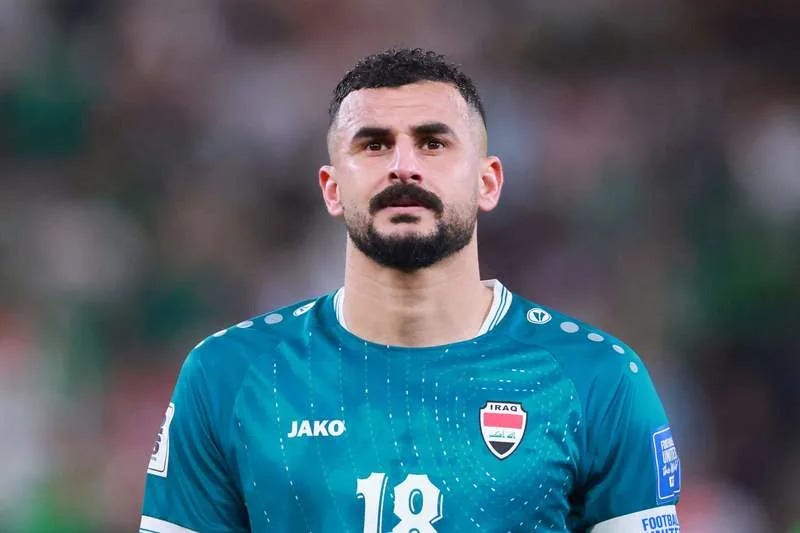
Much of Hussein’s life has been marred by the violence of war. He lived in a village near Kirkuk but was driven out and internally displaced by ISIS in 2014. His brother was abducted and has not been heard from since. Six years prior to this, his father was killed in an attack in Baghdad.
Much like others mentioned in this post, football has provided an escape for Hussein, and has created opportunities for him he likely wouldn’t otherwise have. Even though Iraq didn’t make it past the group stages this year, Hussein made his mark on the World Cup by scoring Iraq’s first World Cup goal in 40 years.
Bernard Kamungo — United States
Bernard Kamungo is another person who used football as an escape from difficult circumstances, and has forged a career out of it. His parents fled the Democratic Republic of the Congo during its civil war, and settled in Nyarugusu Refugee Camp in Tanzania. Kamungo spent the first 14 years of his life living in this refugee camp without electricity or plumbing, wrapping cloths around inflated condoms and medical gloves to make soccer balls
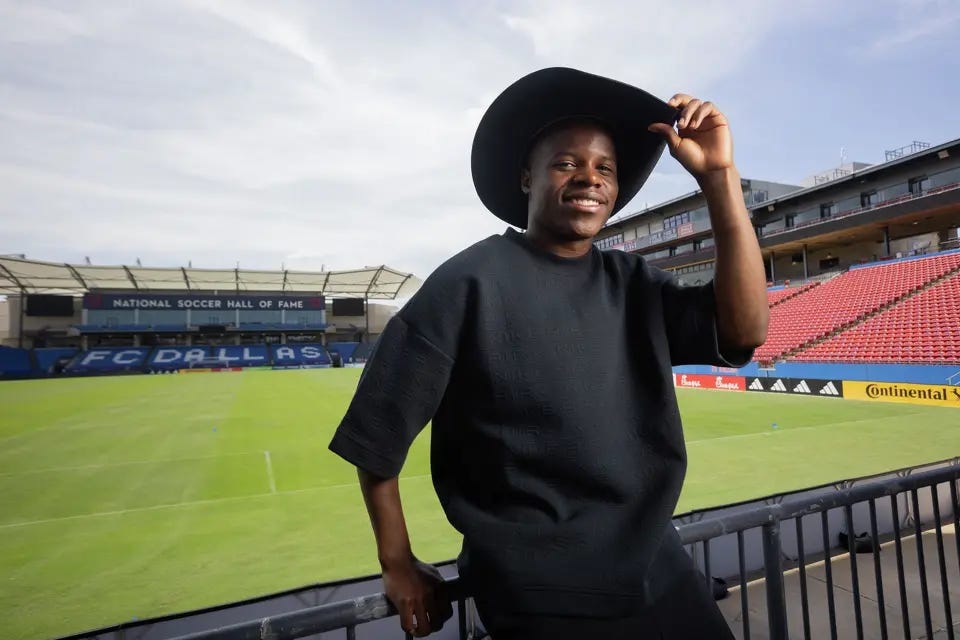
“All I knew was soccer because there was no electronics or anything like that,” Kamungo said. You’re enjoying time with your friends. Honestly, I never thought about the future…we were living in a refugee camp. You just don’t think too much about what’s ahead of you; you only have one plan, and that’s to survive this day to get to another day.”
Life changed in 2016, when the International Rescue Committee found a place for the family. The Kamungos were headed for Abilene, a city of 125,000 that sits 180 miles west of Dallas. (Source: Washington Post)
Kamungo graduated high school in Abilene, and entered a tryout for an MLS reserve team, North Texas SC, for $90. He was signed, and less than two years later would signa four-year contract with professional MLS team, FC Dallas.
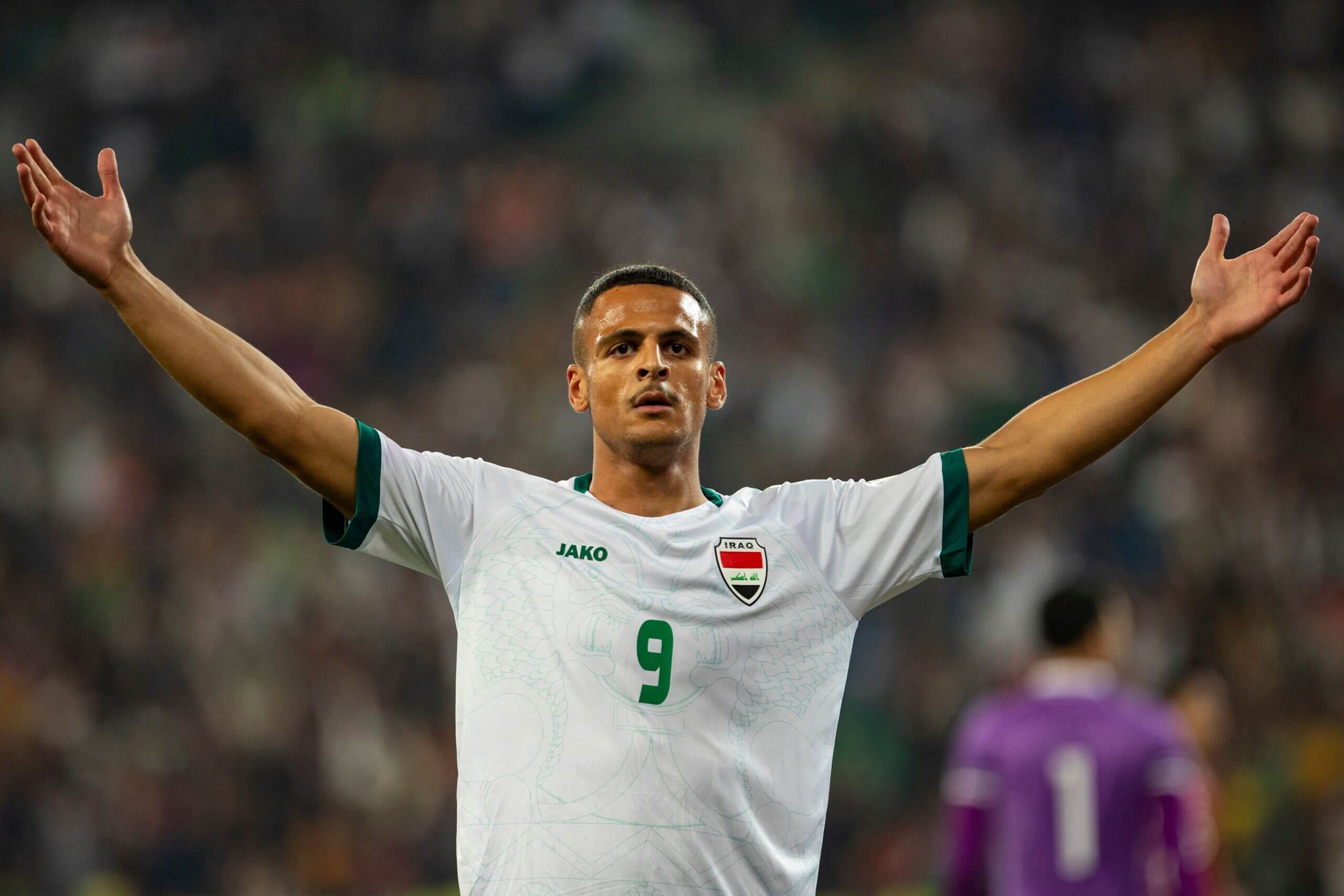
Ali Al-Hamadi — Iraq
Al-Hamadi was born roughly a year before the United States made the despicable and horrific decision to invade his home country of Iraq. His father, Ibrahim, was an activist who bravely participated in peaceful protests against Saddam Hussein’s dictatorship. His father was eventually imprisoned and tortured for his political beliefs. His mother and family pleaded with the Iraqi embassy in the UK, and were eventually able to secure his father’s release. His parents gave up their lives and, in the interest of protecting Ali and the rest of their family, fled to Jordan and eventually made their way to Liverpool, England.

Luka Modrić — Croatia
Luka Modrić is widely recognized as one of the greatest midfielders of all time and is the most decorated Croatian footballer ever. At 40 years old, this will undoubtedly be his final World Cup as a player. While most people recognize him for his impressive accolades over his 23 year professional career, most people don’t know his origin story as a refugee of the Croatian War of Independence.
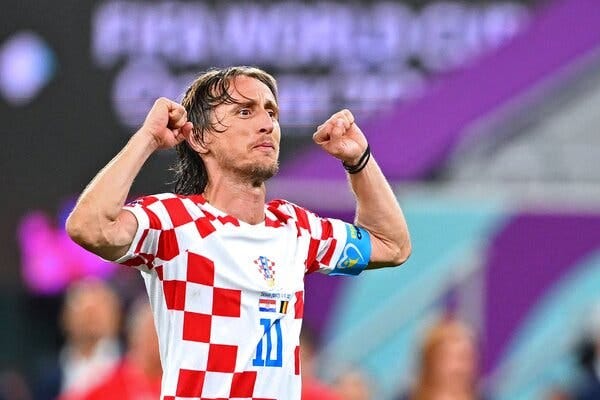

Modrić was born in what was then Yugoslavia. In 1991 — when he was 6 — conflict broke out between Croatians that declared independence from Yugoslavia, and Serbian-controlled Yugoslav People’s Army. Luka witnessed his grandfather’s execution by Serbian rebels, and their house was burned to the ground shortly after him and his family fled. His family lived out of hotels for many years as the war continued
The Modrić family survived any way it could: “They were very poor. They didn’t have money to buy Luka shirts or shin pads. So I made him some wooden ones”. Those shin pads are still around. Basic has them. “I kept them because I knew that Modric would turn into a great player.” (Source: Marca)
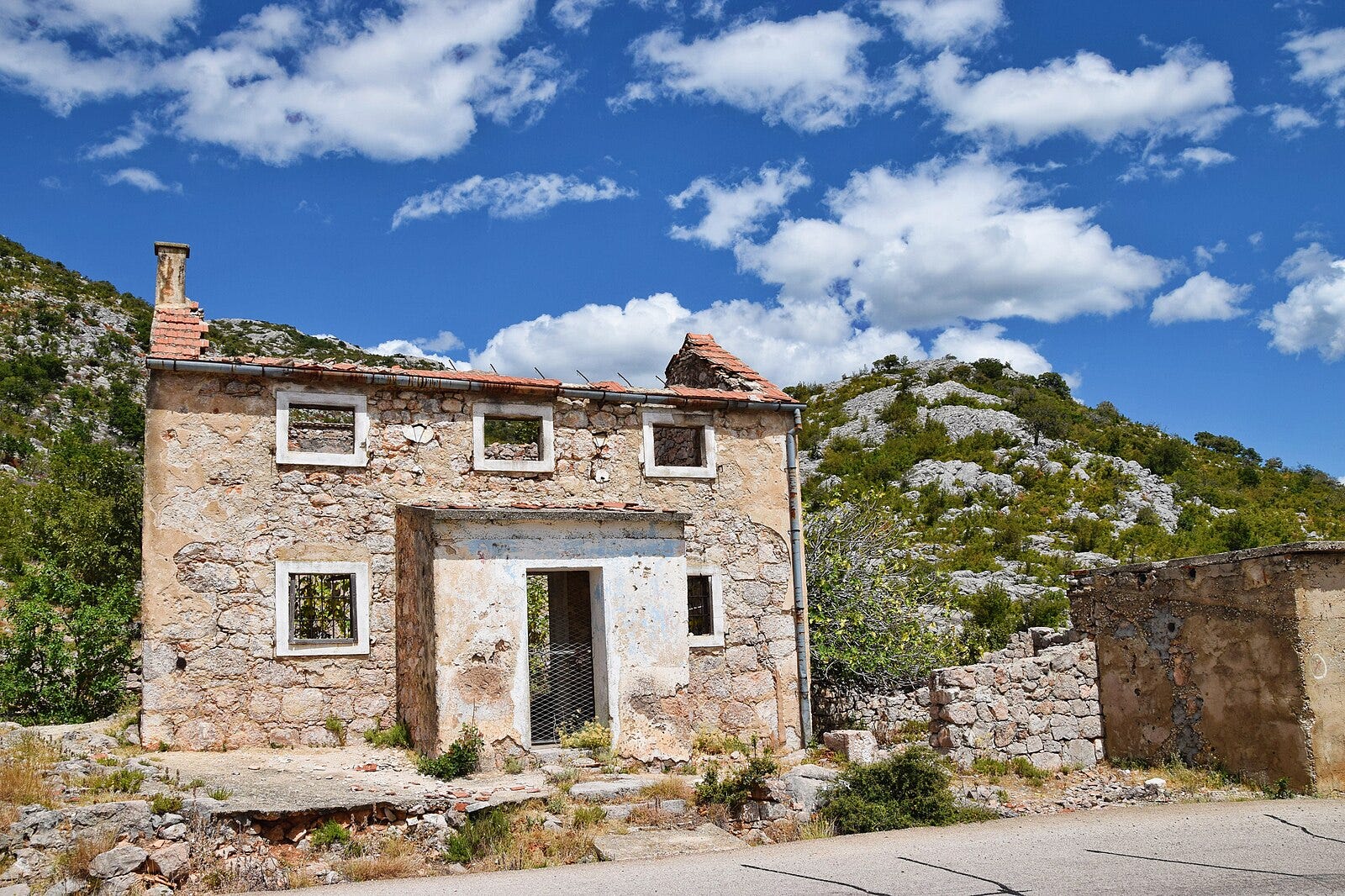
He used football as an escape from the ongoing war, playing in parking lots as bombs fell nearby. Like many footballers who come from conflict zones, the ball provided them a release valve and a respite from the horrors unfolding around them.1
Edin Dzeko — Bosnia & Herzegovina
Edin Dzeko was born just before the start of the Bosnian War, and lived in Sarajevo during the four year long military blockade known as the Siege of Sarajevo. His recounting of displacement and sorrow during his childhood is strikingly sad:
Our home was destroyed, so we had to move in with my grandparents. The whole family lived there under one roof, maybe 15 people crammed into an apartment of 35 square metres.
‘It was constant stress and worry, in case something happened or news came through that someone we knew had been killed. I was only young, and I cried often, through fear. Every day, you could hear the guns firing, and we lost family friends and even some relatives. (Source: Daily Mail)
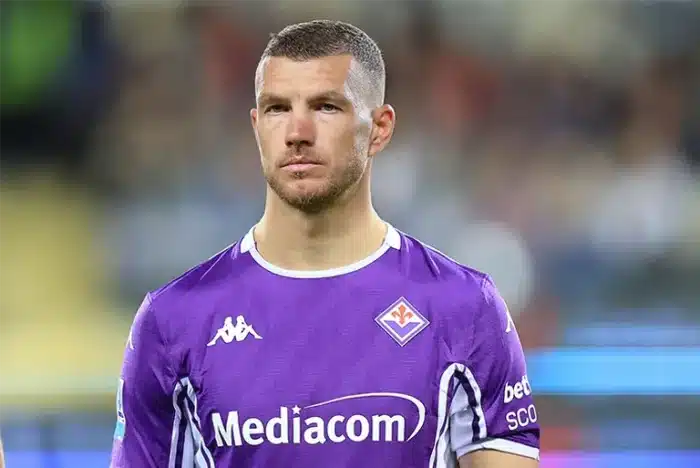
It was, understandably, an extremely traumatizing time for him. He has reflected on this over his career and used his platform to support refugees and others who escape conflict zones. He became the first ever UNICEF ambassador from Bosnia in 2009.
Addendum: Palestinian solidarity
Football is a business built around massive transfers of money.2 When players speak out on issues that are considered controversial by people who hold power, it can threaten their career prospects and livelihood. That makes it all the more significant when they do speak out. I wanted to highlight one that made a gesture of support, despite having a lot to potentially lose from it.
Lamine Yamal — Spain
Lamine Yamal is an 18 year-old3 phenom and currently the most valuable player in the world4 with a market value of €200 million ($227.7 million). Lamine Yamal by some estimates makes the equivalent of $362,000 a week, but grew up poor in Mataró, Spain.5
At his young age, every person advising him on his professional career is probably telling him to avoid geopolitics and current affairs like its the bubonic plague. He wields a massive platform that will grow tenfold throughout his career, and his voice is heavily influential. So much so that he recently drew the ire of Israel Katz, the defense minister of Israel and a disgusting genocidal monster.
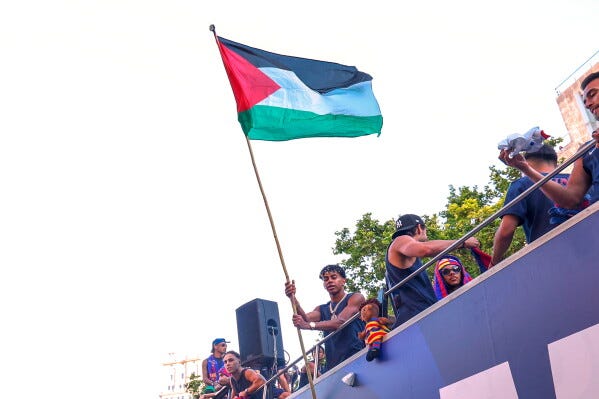
After Lamine Yamal’s club team, FC Barcelona, won their league championship earlier this year, they held a parade throughout the streets of Barcelona with the players riding on an open top bus through a sea of nearly 750,000 fans. Lamine Yamal was seen waving the Palestine flag atop the bus.
At one point along the way, Yamal appeared to ask for a Palestinian flag on a long pole to be passed up to him on the bus from the crowds below. The 18-year-old Spain international later posted a photo of himself waving the flag to his Instagram account, which has 42million followers. (Source: The Athletic)
The war criminal defense minister, who is an ardent supporter of the illegal settlements happening in the West Bank, clutched his pearls in response.6 Even so much as waving a flag was seen as a sign of hostility toward the regime committing the crime of all crimes.
To Spain’s credit, they’ve been exponentially more critical of Israel’s genocide than the United States — which, to be fair, isn’t a high bar to clear whatsoever.
Later on Thursday, the Prime Minister of Spain, Pedro Sánchez, supported the gesture made by Yamal, stating "Those who believe that waving the flag of a sovereign state means inciting hatred have either lost their minds or have been blinded by their own ignominy," Sánchez added in a message posted on his official X account. (Source: ESPN)
While this may seem like a small gesture of solidarity, it actually isn’t. Given Lamine Yamal’s status as the highest-valued athlete of the most popular sport in the world, this action was profoundly important in demonstrating to people where he stood on this and how to lead by example.
Alright, that’s enough World Cup talk for now. Thank you for indulging me!
To give you some perspective, a total of £3.087 billion ($4.12 billion) was spent on player transfers during the 2025 summer transfer window…just for the English Premiere League
Edit: he turned 19 yesterday.
As of Monday, July 13th. Technically tied with Erling Haaland of Norway.
His full name is Lamine Yamal Nasraoui Ebana. The name Lamine Yamal is a compounded first name, in honour of two people who helped his parents out financially. During a challenging period, two people named Lamine and Yamal helped them afford rent and other basic necessities when they couldn’t pay for it. His father vowed that if they ever had a child, he would 'name the child after them as a gesture of gratitude.
I chose to link to Dropsite instead of the genocidal monster’s actual twitter page, but there is a screenshot included in the post for the full statement.
Thanks for broadening your scope for the World Cup. After all, Appalachia is part of the world!
I'm glad that you diverged into football and immigration this week. I almost skipped it as I'm not a big sports fan. I'm so glad I didn't. It was inspiring! Thank you.