

We should've listened to Paul Wellstone
The late, great progressive from the land of 10,000 lakes basically predicted the 2024 election results back in 2001…sorta

Before anyone gets upset, Part 2 of “Do Appalachians vote against their interests” will be posted next week.
I was feeling a need for some political inspiration recently, and when I do that I try to read things from the pre-Trump/social media era (because anything after that is a shitshow, let’s be honest1).
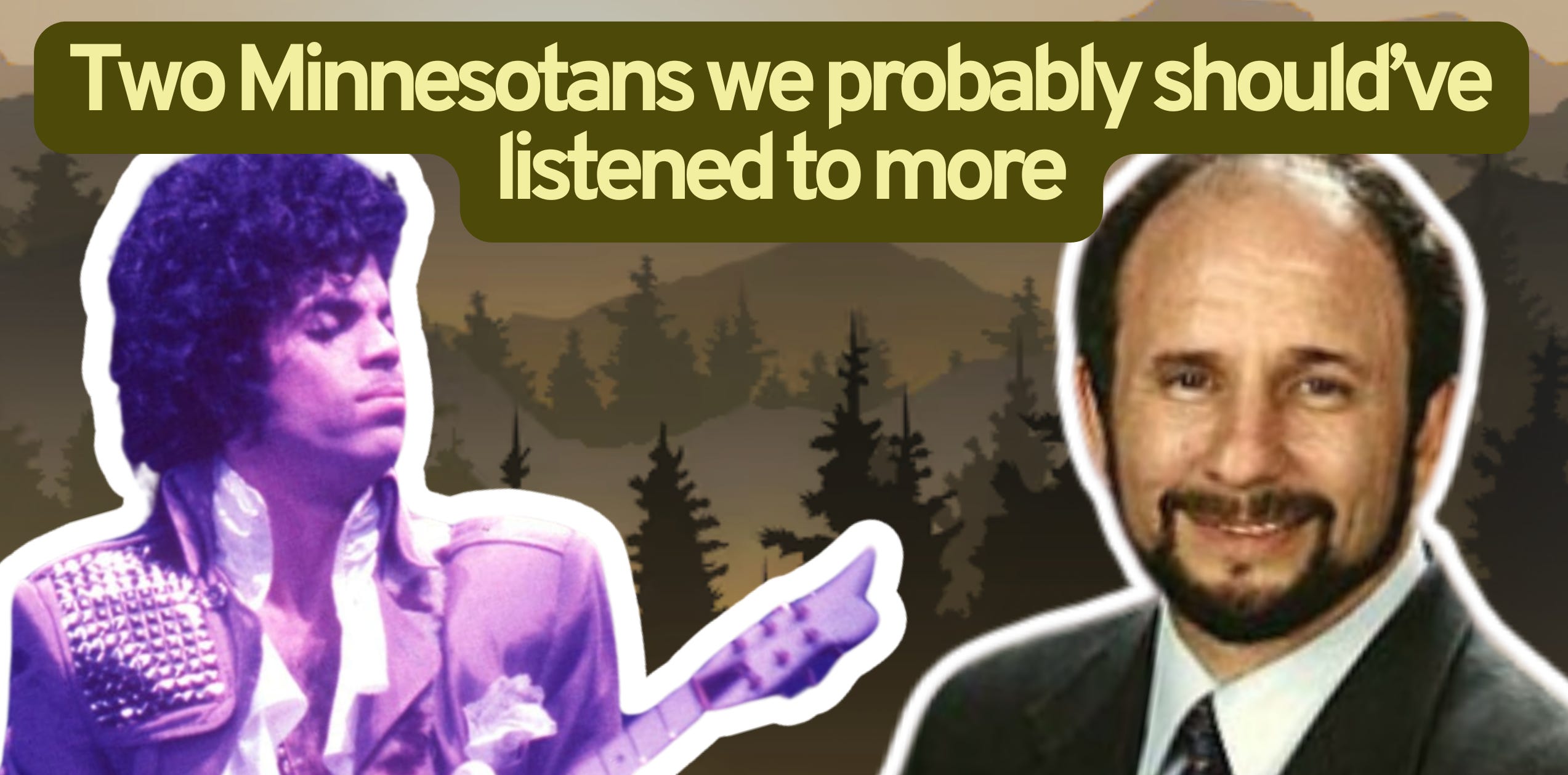
I came across an article written by the late Sen. Paul Wellstone called “A Winning Progressive Politics” — published in 2003 but written by him prior to his death in 2001.
When I say that everything he wrote is almost perfectly aligned with the modern political situation in the U.S., I am not exaggerating one bit.
The “Bernie before Bernie”
For those who don’t know, Paul Wellstone was the OG progressive of the Senate (like Bernie Sanders, only less grumpy and with a Minnesota accent). He believed in integrating community organizing into electoral politics, lest you marginalize social movements.
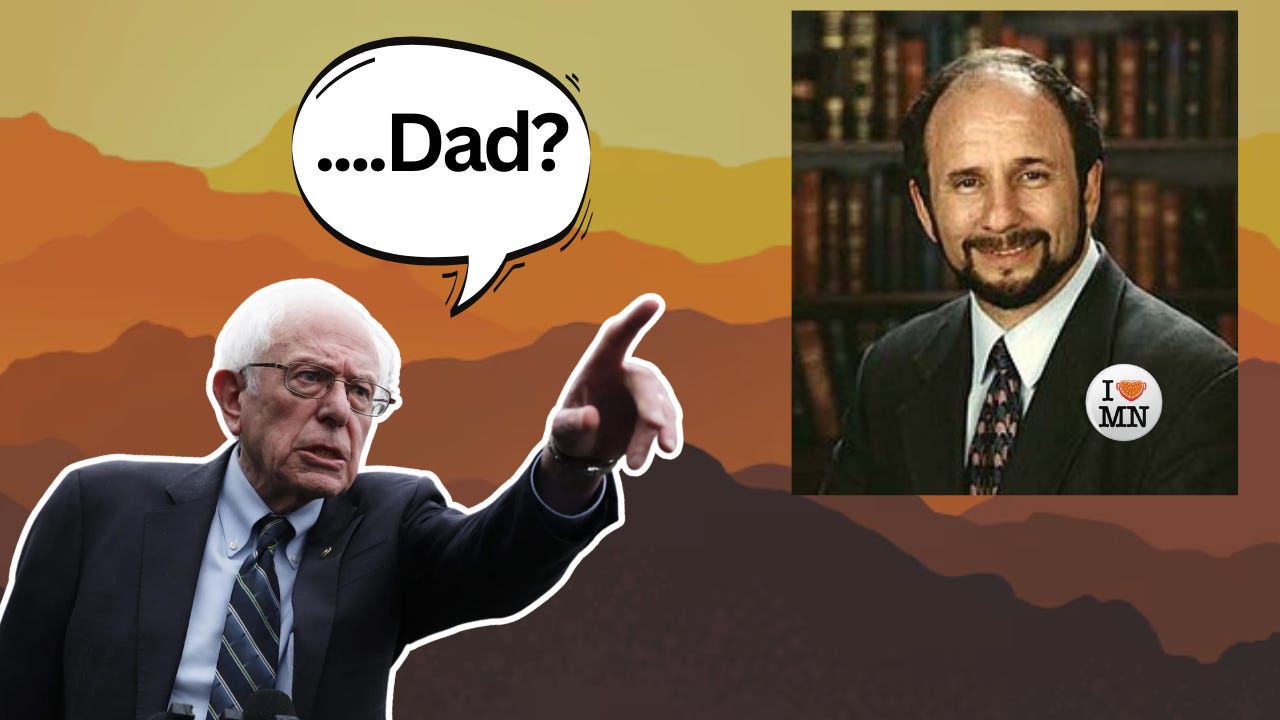
Salon coined the term “This was Bernie before Bernie” to describe him, and it’s fitting in the sense that he was an unapologetic progressive who lived his values. He earned the nickname “the conscience of the Senate” for a reason.
The first Senate vote he cast, in 1991, was to oppose U.S. military action in the Persian Gulf. Eleven years later, he cast his last vote against a resolution authorizing President George W. Bush to use force against Iraq.
While serving in the Senate, Wellstone remained an organizer. He was frequently on picket lines and at rallies sponsored by labor, community, environmental, and other progressive groups.
The issues he raised in 2001 are the same as they are today
Paul Wellstone figured it out well before anyone in the national Democratic Party today did.2
The entire piece is predicated on Wellstone questioning what “moving to the center” means in electoral politics and what value (if any) that has. I’m going to share some excerpts and let you decide if any of this sounds familiar.
On Jesse Ventura’s election in 1998
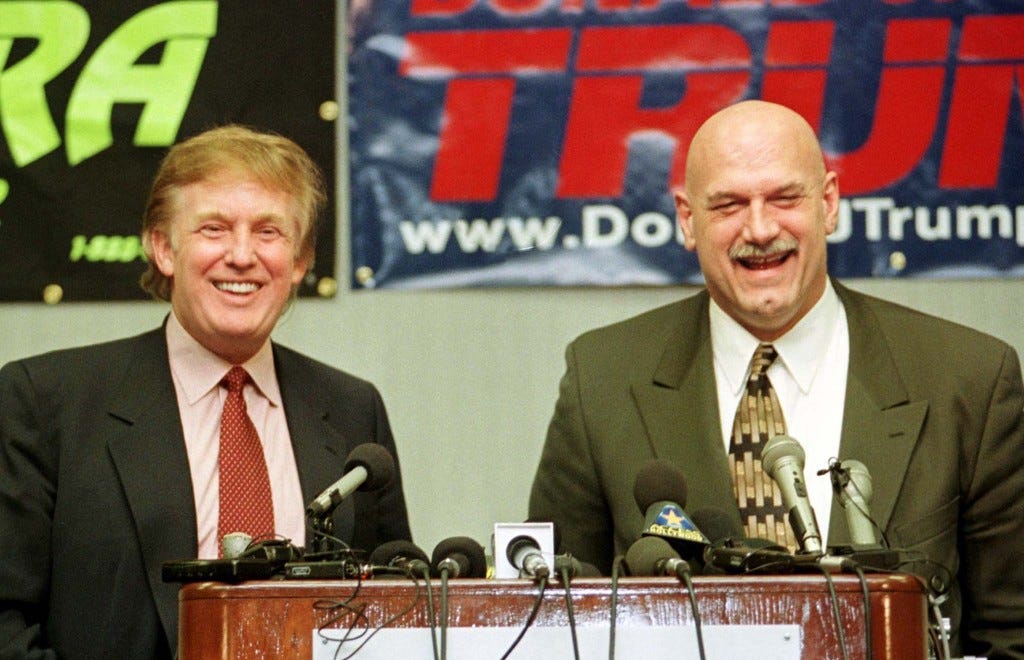
In 1998, Jesse Ventura, a former professional wrestler, ran for governor of Minnesota as a third-party candidate and, in his words, “shocked the world” by defeating Democrat Skip Humphrey, the son of Hubert H. Humphrey, and Republican Norm Coleman, the mayor of St. Paul. These two experienced and very capable politicians didn’t see it coming. I didn’t either, until the last two weeks.
He was figuratively giving the finger to politics as usual. His campaign was populist and brilliant. He was Minnesotans’ revenge against a politics that they perceived as fake and phony and dominated by money interests.
The people of Minnesota clearly expressed their anger toward politics, an anger that many Americans share. That does not mean that people do not care what happens. They care deeply, sometimes desperately. But they also feel that their own struggles, the cares of their daily lives, are of little concern in the chambers of power, that whomever they choose will make little difference to them, their loved ones, and their communities.
Notice any parallels that can be drawn from his description of Jesse Ventura’s run for governor and a certain candidate that the Republicans have nominated the past three election cycles?
On how normal people are hurting despite the economy being “good.”
My biggest pet peeve of this past election cycle was Democrats championing broad, macroeconomic statistics about the stock market, inflation percentages, and unemployment rates as a sign the economy was great and people should be satisfied. Wellstone saw right through this shit in 2001.
[Voters] voices are not statistics, their fears, and hopes are not measured by a consumer price index or gross national product.
According to the averages and indicators, this is a prosperous time for our country. It is a time of substantial growth and low inflation, of a booming stock market and low unemployment. But averages are New England Journal of Public Policy 76 misleading. They tell nothing of the ends of the curve — the height at the top or the depth at the bottom. The averages say nothing about the people I have met in my travels and described in this book. They say nothing about the children in Tunica, Mississippi, or the students in Louisiana studying desperately to pass a high-stakes test. The statistics tell nothing of the millions of Americans who don’t have health insurance and live in terror of getting sick
I swear to you, I did not alter a single word of that last block quote.
My god, the comparison to the past couple of months is jaw-droppingly similar!
It’s almost like we should’ve been listening to people when they showed massive amounts of support for populist economic policies and their concerns about how the rich keep getting richer while the poor keep getting poorer.
I know, radical stuff.
Questioning the notion that politicians should “move to the center” to get elected
One of the criticisms of the Kamala Harris campaign/Democrats in general that for some reason is getting attention is the idea that she should have “run more to the center” since “that’s where the majority of Americans are.”
Her campaign might as well have been drawn up by defected, bygone era Republicans. They made a big deal about campaigning with Liz Cheney, for god’s sake. Harris basically endorsed a GOP-drafted immigration bill, bragged about owning guns, went full bore on Israel, and barely dabbled in populist economic/pro-worker rhetoric…just to name a few examples.

I think this criticism of a lack of centrism is ridiculous. It would be difficult to imagine a campaign that could have been more centrist than what Harris ran, and we can litigate that until the cows come home — but by that time the cows are tired from a long day at work and the last thing they want to do is talk politics. Suffice it to say, the right spent millions in media ad buys taking a handful of things Harris said and blowing them up into a defining campaign narrative and won the story war. Case closed.
The Joe Manchins of the world have their place in certain politics, but they’re not going to fix the systemic problems in the U.S.
Anyway, I’m going to leave you with something Wellstone wrote about moving to the center that I think is timely and worth marinating on for a bit. It is a bit lengthy, but I promise you it is timely.
I have never understood arguments for the need for politicians to “move to the center” to get elected. What is the operational definition of “the center”? If what is meant is that you need to have more votes than your opponent, then I am all for being in the center. But this is too obvious
If what is meant by the center is the dominant mood of the populace — the issues that are important issues to Americans and what they hope for then I would again argue for the need to occupy the center. A politics that is not sensitive to the concerns and circumstances of people’s lives, a politics that does not speak to and include people, is an intellectually arrogant politics that deserves to fail.
So what is the center? The empirical evidence is irrefutable. Seventy-five percent of voters think business has too much influence in Washington. Seventy-one percent agree that companies that lobby and give political contributions while getting government contracts are taking part in “legalized bribery.”
About three quarters of voters believe that at least half the time members of Congress make decisions based on what their contributors want.
Fifty-four percent of voters agree that the “economic boom has not reached people like [them].”
If you ask people at the Town Talk Cafe in Willmar, Minnesota, how many of them consider themselves liberals and how many conservatives, the response is about 25 percent to 75 percent.
Okay, now read this last part and imagine Bernie Sanders is saying it:
But if you get beyond the labels and probe a little further, you’ll find that the overwhelming majority can’t stand the pharmaceutical companies, oil companies, insurance companies, grain companies, and packers. They believe that government today too often serves the interests of the already powerful and wealthy.
Present company excluded of course
Many will fairly argue that the DNC still hasn’t figured out things, to which I would tend to agree.
I agree.