

Trump wants to defund one of the most important agencies for one of the poorest parts of the country.
This commission has been instrumental to bringing the region out of the darkness and into the light.

Donald Trump and JD (John Dammit) Vance are on a war path to destroy the federal government as we know it. To the vast majority of people, this will fundamentally alter their lives negatively.
The Big Beautiful Bullshit Bill was passed by Congress and signed by Trump on July 4th — one of the most destructive bills passed in recent memory, whose worst parts won’t even take effect until after Trump leaves office.
But one proposed cut hits home, literally. It is for a commission that has, despite its flaws, brought billions of dollars to one of the country’s poorest regions over its 50+ years in existence: The Appalachian Regional Commission (ARC).
The White House’s discretionary budget recently came out, and it included a 93% cut to the ARC’s budget……93 PERCENT!
The proposal is included in a discretionary budget, a year-to-year funding proposal that is different than the mandatory funding included in the recently passed Trump-Republican megabill.
In the discretionary budget, Trump proposed a cut of 93% for the regional commission, from $200 million to $14 million in the 2026 fiscal year, according to the commission.
Local and state officials and organizations from around the region sent a letter to members of Congress asking that the funding the commission has received in the past be maintained.
“The ARC has been instrumental in driving forward (the region’s) potential,” the letter stated. “Reductions to its programs pose a risk to innovative initiatives in workforce development, community revitalization and American-made resilient energy.”
Source: Columbus Underground
Trump and JD Vance might as well just say,
“Dear Appalachia, you’ve been too greedy all these years with this modest amount of federal money. It is being taken from you and instead given to the people who really deserve it: billionaires and large corporations!”
I’m going to give y’all a little background on the ARC, then explain why it’s important. This is something that should seriously concern you.
The ARC was a tool in LBJ’s “War on Poverty” toolbox
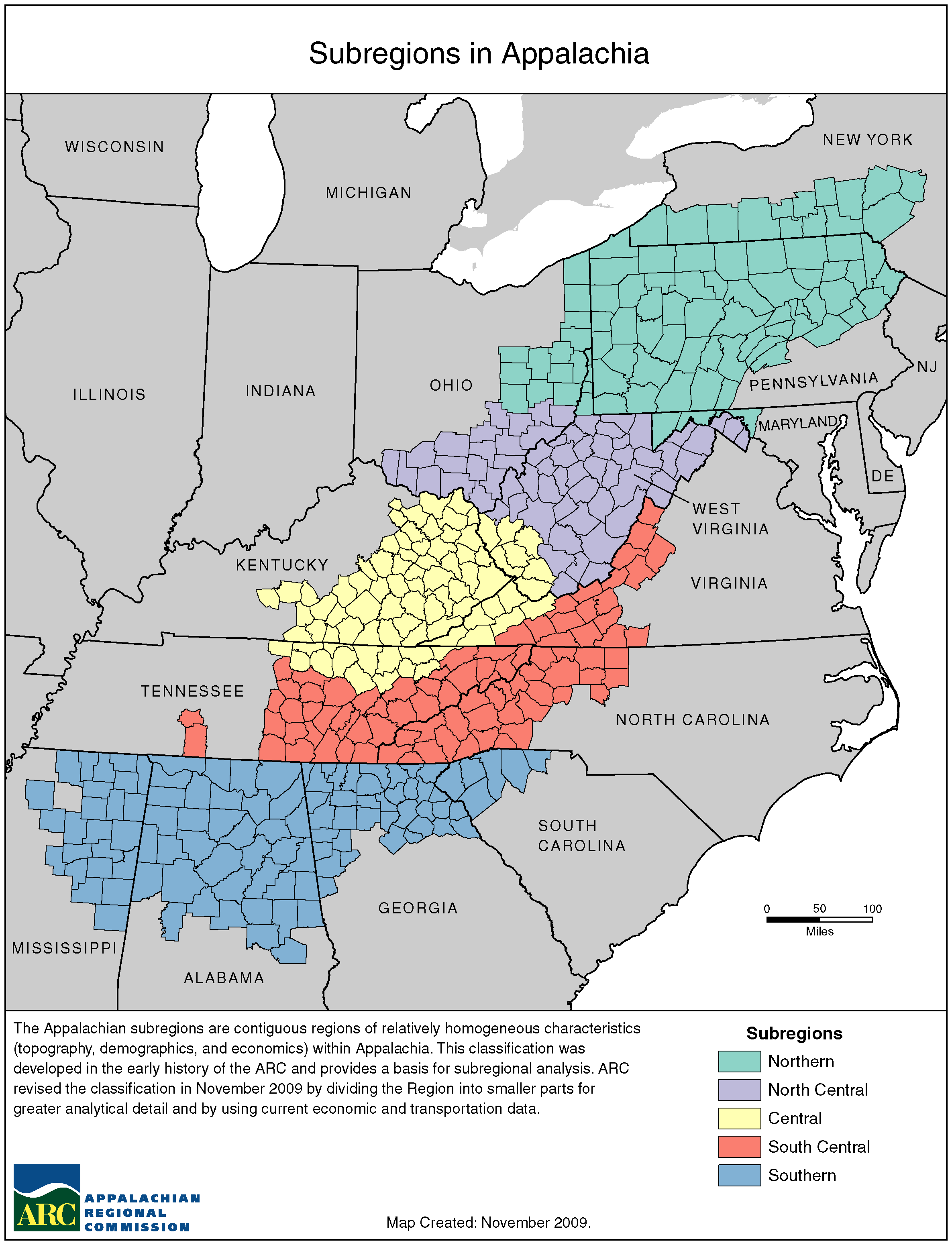
Appalachia has always been behind the rest of the country on most measures including wealth, infrastructure, jobs, etc. In the 1950s and 60s, it was like another world. Here are just a few statistics from 1960:
Startling stats
1/3 of Appalachia’s population lived in poverty, which was double the national rate
Per capita income was 2/3 of the U.S. Average
Unemployment was twice the national average
Rates of infant mortality were 50% higher than the national average
50% of all farm homes were estimated to not have indoor plumbing
Only 43% of homes in central Appalachia had a telephone
This is just a small snippet of statistical examples for how left behind Appalachia was in 1960.
To address the chronic poverty and close the gap between Appalachia and the rest of the country, the Appalachian Regional Commission was formed in 1965.
It’s five strategic investment goals are the following:
Creating economic opportunities
developing a ready workforce,
investing in infrastructure, including the Appalachian Development Highway System,
leveraging natural and cultural assets,
and bolstering leadership and community capacity.
Results
The results have been impressive. Since 1965, ARC has funded over 34,000 economic development projects and invested over $6 billion in Appalachia, which has been matched by over $12 billion in other federal, state and local funding sources.
$6 billion. With a B. That is $6 billion that would have otherwise not gone to Appalachia but for this critical federal program.
Consider just this handful of statistics that map the difference between 1960 and 2000
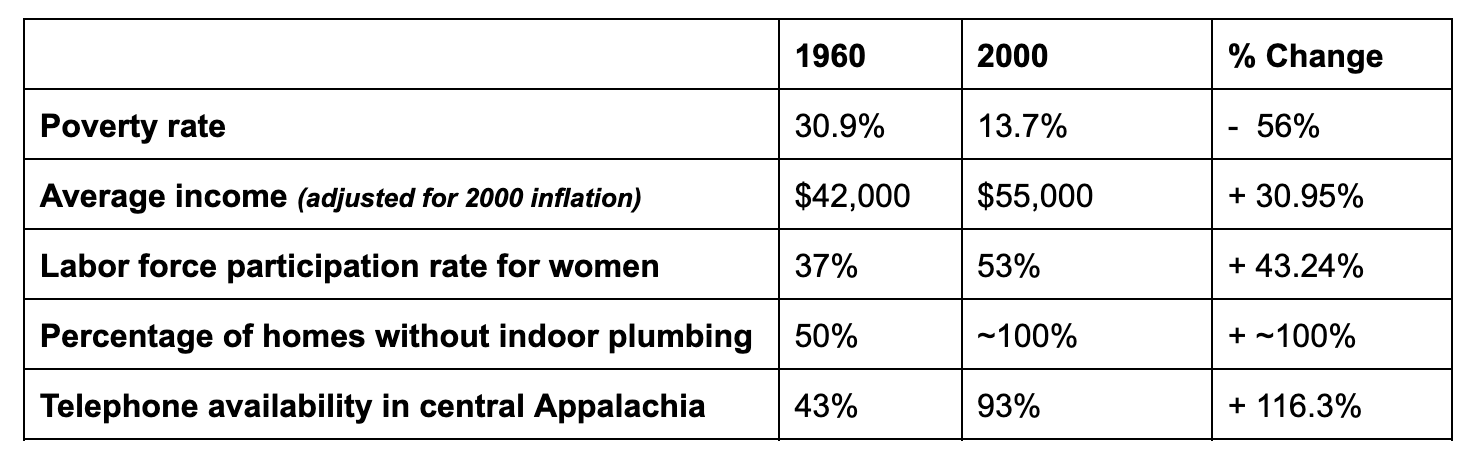
The ARC also helped cut the number of high-poverty counties in Appalachia from 295 in 1960, to 91 in 2015, reduced the infant mortality rate by two-thirds, and double the percentage of high school graduates.
Ripping away a federal funding lifeline for rural Americans
The ARC is not without its flaws, as is the case with any government agency. However, it is clearly an immensely important vehicle for delivering important federal dollars to the most economically distressed parts of the country — a place historically neglected and maligned by so many in power.
Just this past fiscal year, the ARC invested $365 million into the region with $593 million in project matching funds on 583 projects, which resulted in the creation or retention of 16,073 jobs.
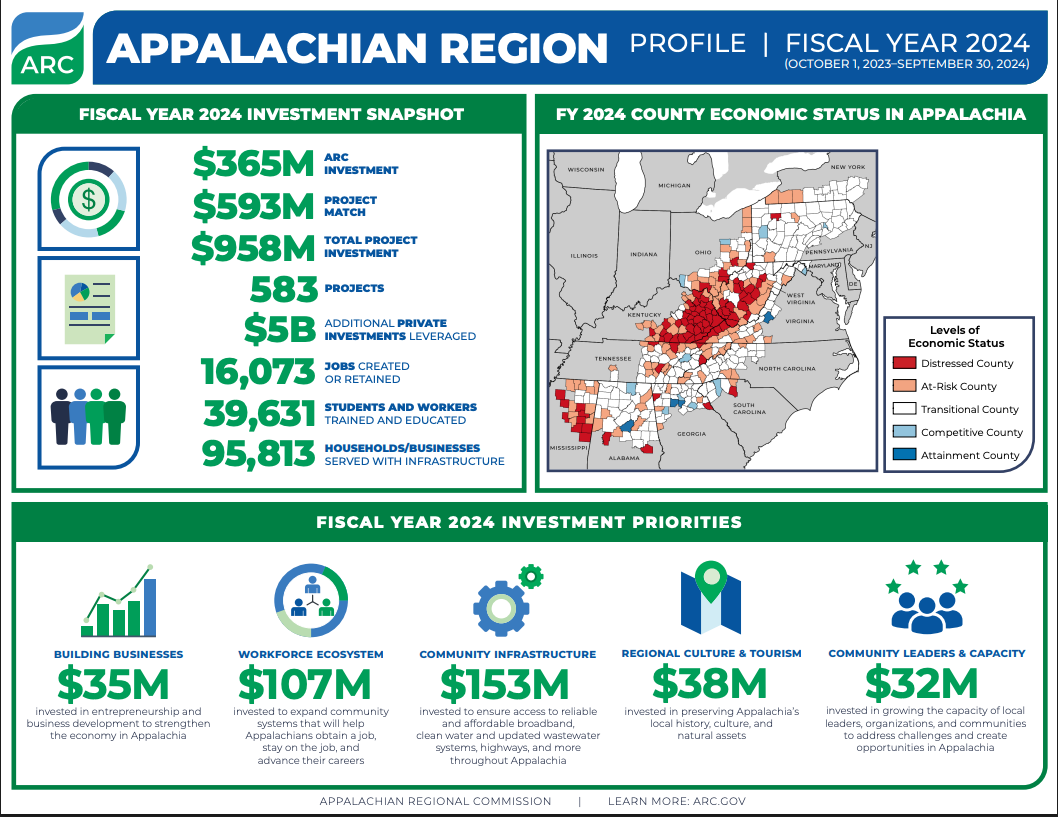
Many of their projects are ones that are considered essential for the health, well-being, and economic mobility of the people who live here. There’s a good chance you may not even realize a project is being funded, in whole or in part, by ARC.
Here are just a handful of very recent project grants the ARC has awarded:
$14.5 million to five collaborative, multi-state projects that will expand workforce training and capacity building in 8 states.
$3.5 million for Hurricane Helene business recovery fund in North Carolina
$68.2 million to 65 projects that will go toward economic revitalization in coal-impacted communities
$11.5 million to 39 projects supporting Appalachians in recovery from addiction by creating or expanding services in the recovery ecosystem and workforce entry/re-entry
The 93% cut in the ARC’s funding is effectively defunding the commission entirely. The ARC is essential for ensuring 1) money gets to Appalachia, and 2) that money is competently spent on things that will help the region.
Appalachia is already chronically behind the rest of the country on so many metrics, and the ARC has been an important — albeit, insufficient — bandage to help heal that wound. By ripping this bandage away, the Trump Administration is telling Appalachia that it doesn’t care if it bleeds out, so long as they get to save a few bucks in the budget to continue giving greedy corporations and billionaires tax cuts.
Worthwhile to mention that juxtaposed with all our poverty is that Kentucky was the leading coal-producing state for years and 3/4 of that coal came from its eastern mountains in Appalachia. Central Appalachia, as well as northern, is rich in mineral wealth but the resources are owned by industrialists. We are a colony of the energy conglomerates. It serves them well for this region to be seen as in poverty. As Harry Caudill said, there are no museums or universities erected with the gazillions of dollars from coal extracted here by the big name philanthropists. So who should be helping Appalachia?
Of course he does. He hates his base ( he has said this on a couple occasions) and everyone else. Please let him experience what he is putting other people through.